Best eSIM or hotspot for Japan’s rural areas and Thailand’s cities
Best eSIM or hotspot for Japan’s rural areas and Thailand’s cities ClubRive …
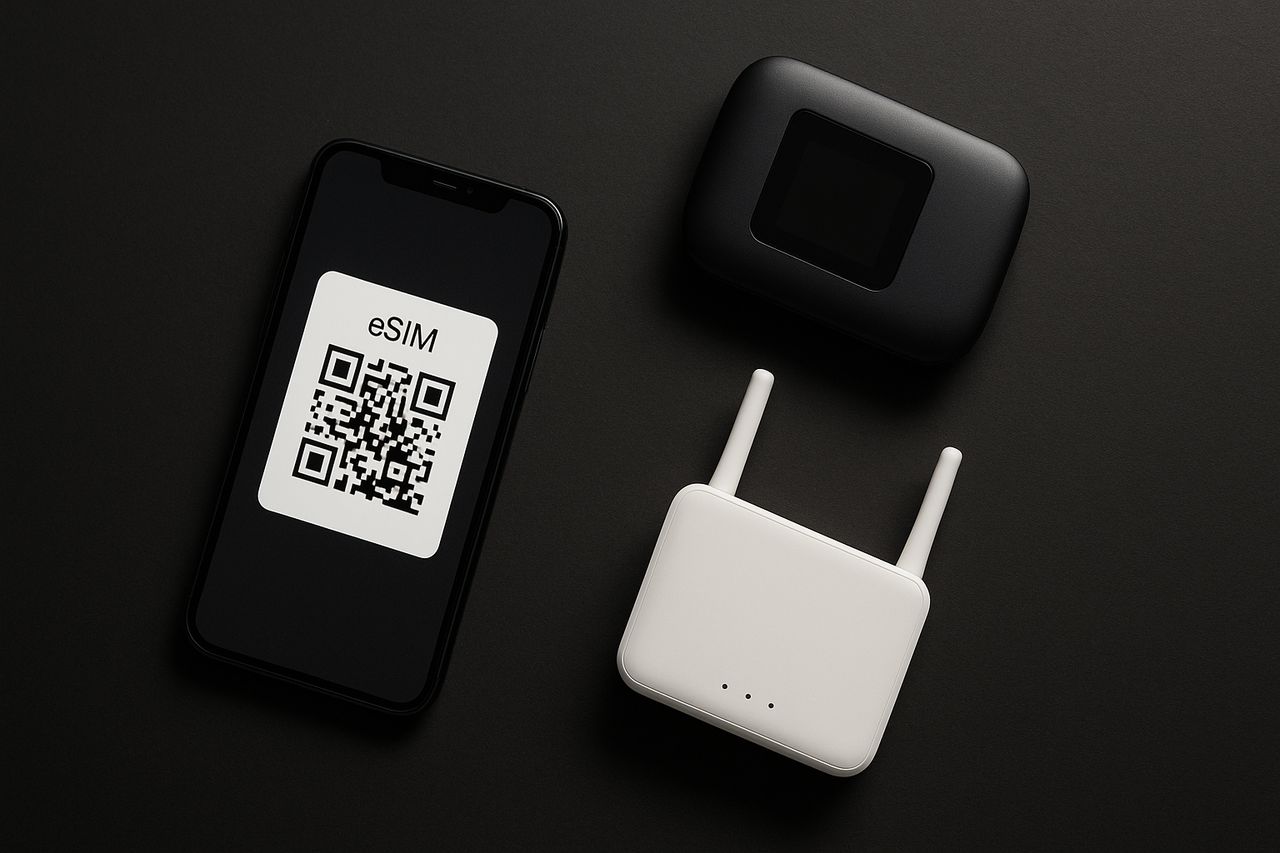
Best eSIM or hotspot for Japan’s rural areas and Thailand’s cities
TL;DR:
- In rural Japan, pick an eSIM on NTT Docomo for the widest reach. Ubigi is the safest bet.
- In Bangkok and big Thai cities, AIS Tourist eSIM gives top speeds and coverage.
- For one plan that works in both, use an Asia regional eSIM like Airalo Asialink or Nomad APAC. Speeds depend on local partners.
- Portable hotspots like Solis or GlocalMe are fine for sharing, but add cost and can be slower. eSIMs are simpler.
- Avoid “unlimited” plans with strict fair-use. Heavy use may trigger throttling.
You want stable, fast internet across two very different cases: off-grid Japan and dense Thai cities. The smart path is to match the plan to the best local network in each country, then consider a single regional eSIM if swapping feels painful.
Dates and sources are current to 22 September 2025.
Quick answer by scenario
Rural Japan
Choose an eSIM that uses NTT Docomo. Docomo scores best for coverage experience and 5G reach, and it performs more consistently in rural zones. Ubigi is owned by an NTT Docomo subsidiary and lists local partners clearly, which makes it a strong pick for a range outside big cities.
Practical pick: Ubigi Japan eSIM. Get a fixed-data or “unlimited” option. Activation is simple through the app, and 5G is available where supported.
Good alternatives: Nomad or Airalo Japan eSIMs. Both usually ride KDDI/au or SoftBank, which work well in cities and most towns, but may trail Docomo in remote areas. If you do not leave popular routes, these are fine.
Urban Thailand (Bangkok, Chiang Mai, Phuket, Pattaya)
In cities, AIS has the best overall user experience and coverage. If you want the fastest, simplest option, buy the AIS Tourist eSIM with 5G. True-stac also offers 5G after the merger, but AIS still tops many experience metrics.
Practical pick: AIS Tourist eSIM. It includes 5G, often unlimited local Wi-Fi, and easy airport pickup or online eSIM purchase.
Good alternatives: True-dtac Tourist SIM/eSIM or dtac Happy Tourist for set-data packs. All are easy to buy on arrival.
One SIM for both countries
If you want zero swaps, use a regional Asia eSIM.
- Airalo Asialink covers 18 countries including Japan and Thailand. Plans are flexible and easy to top up.
- Nomad APAC offers 4G/5G across many Asia destinations, including Japan and Thailand.
Note, a regional eSIM may not always be attached to the single best local network, so peak speeds can vary.
eSIM vs portable hotspot: which is better?
eSIM wins for most travelers:
- No extra gadget, battery, or rental return.
- Connects to top local networks for best speed.
- Works the moment you land.
Portable hotspots like Solis or GlocalMe are useful if you must share with many devices, or your phone lacks eSIM. You pay for the device and day passes, and many hotspots cap speed to 4G. Battery life is good, but MVNO routing and fair use can slow heavy users.
Recommended setups
If you will visit rural Japan, then Thailand’s cities
- Japan: Ubigi Japan eSIM on Docomo. Choose a plan that covers your trip length.
- Thailand: AIS Tourist eSIM for city speed and 5G. Buy online or at the airport.
If you want one SIM for both
Use Airalo Asialink or Nomad APAC. Accept that speeds may vary by partner network, but you will stay connected with one plan.
If you must share to laptops and cameras
Carry Solis Lite or GlocalMe Numen Air. They support many countries and share 10+ devices. Expect 4G on Solis Lite and 5G on Numen Air, with separate data costs.
Pricing snapshots and what to watch
- Japan eSIMs: Marketplaces show many plans. Ubigi sells fixed and unlimited options. Nomad and Airalo offer tiered data. Check the network each uses.
- Thailand eSIMs: AIS, True-dtac, and dtac tourist plans are cheap and fast, with 5G where available. Buy direct for clear terms.
- “Unlimited” caveat: Some vendors slow heavy use under Fair Use Policy. Holafly says speeds may drop after high usage. Read the fine print.
Coverage facts that matter
- Japan: Docomo is the availability and 5G coverage leader. Opensignal also found Docomo most resilient in rural areas in early 2025. KDDI/au wins many user-experience awards, so city speeds are also strong.
- Thailand: AIS leads key experience metrics and coverage in 2025 reports. True-stac reports very wide 5G after the merger. Urban users will do well on either, with AIS often ahead.
Simple buying checklist
- Pick by network first. Docomo for rural Japan. AIS for Thai cities.
- Decide single-country or regional. Regional is easier across borders, local is usually faster.
- Confirm 5G bands on your phone. Newer iPhone and Android models support Japan and Thailand bands.
- Avoid vague “unlimited.” Check fair-use and hotspot limits.
- Screenshot APN instructions. Install before you fly.
- Keep a backup. Download a second eSIM from a different store in case one app fails.
Why it matters
Bad internet can ruin remote work days and waste time. Matching the eSIM to the strongest local network cuts dropouts in Japan’s countryside and keeps uploads fast in Bangkok. A regional eSIM or a hotspot is there if you value simplicity or device sharing.
Sources:
- Opensignal, “Japan Mobile Network Experience” reports and rural analysis, https://www.opensignal.com/reports/2024/10/japan/mobile-network-experience and https://www.opensignal.com/2025/05/07/our-ntt-docomo-users-see-the-most-resilient-network-experience-in-rural-parts-of-japan, accessed 22 Sep 2025
- Opensignal, “Thailand Mobile Network Experience,” Jun 29, 2025, https://www.opensignal.com/reports/2025/06/thailand/mobile-network-experience
- AIS, Tourist SIM and eSIM plans, https://www.ais.th/en/consumers/package/international/tourist-plan, accessed 22 Sep 2025
- True-dtac, Tourist SIM details, https://www.true.th/prepaid/sim/tourist, accessed 22 Sep 2025
- Airalo, Asialink Asia regional eSIM and Japan eSIM pages, https://www.airalo.com/asia-esim and https://www.airalo.com/japan-esim, accessed 22 Sep 2025
- Nomad, APAC regional eSIM and Japan page, https://www.getnomad.app/apac-eSIM and https://www.getnomad.app/japan-eSIM, accessed 22 Sep 2025
- Ubigi, Operator partners and Japan plans, https://cellulardata.ubigi.com/ubigi-mobile-networks-partners-list/ and https://cellulardata.ubigi.com/rates-and-coverage/japan-data-plans/japan-unlimited-7-days/, accessed 22 Sep 2025
- Holafly, Japan eSIM Fair Use Policy, https://esim.holafly.com/esim-japan/, accessed 22 Sep 2025
- Solis, Solis Lite hotspot specs, https://soliswifi.co/products/solis-lite-hotspot, accessed 22 Sep 2025
- GlocalMe, hotspot lineup and Numen Air 5G, https://store.glocalme.com/ and https://www2.glocalme.com/en-US/portable-wifi/numen_air_5g, accessed 22 Sep 2025


