What We Know About the 7-Ton Meteor That Stunned Northeast Ohio
A 7-ton meteor tore across Cleveland skies, creating a massive sonic boom and visible fireball seen for states.
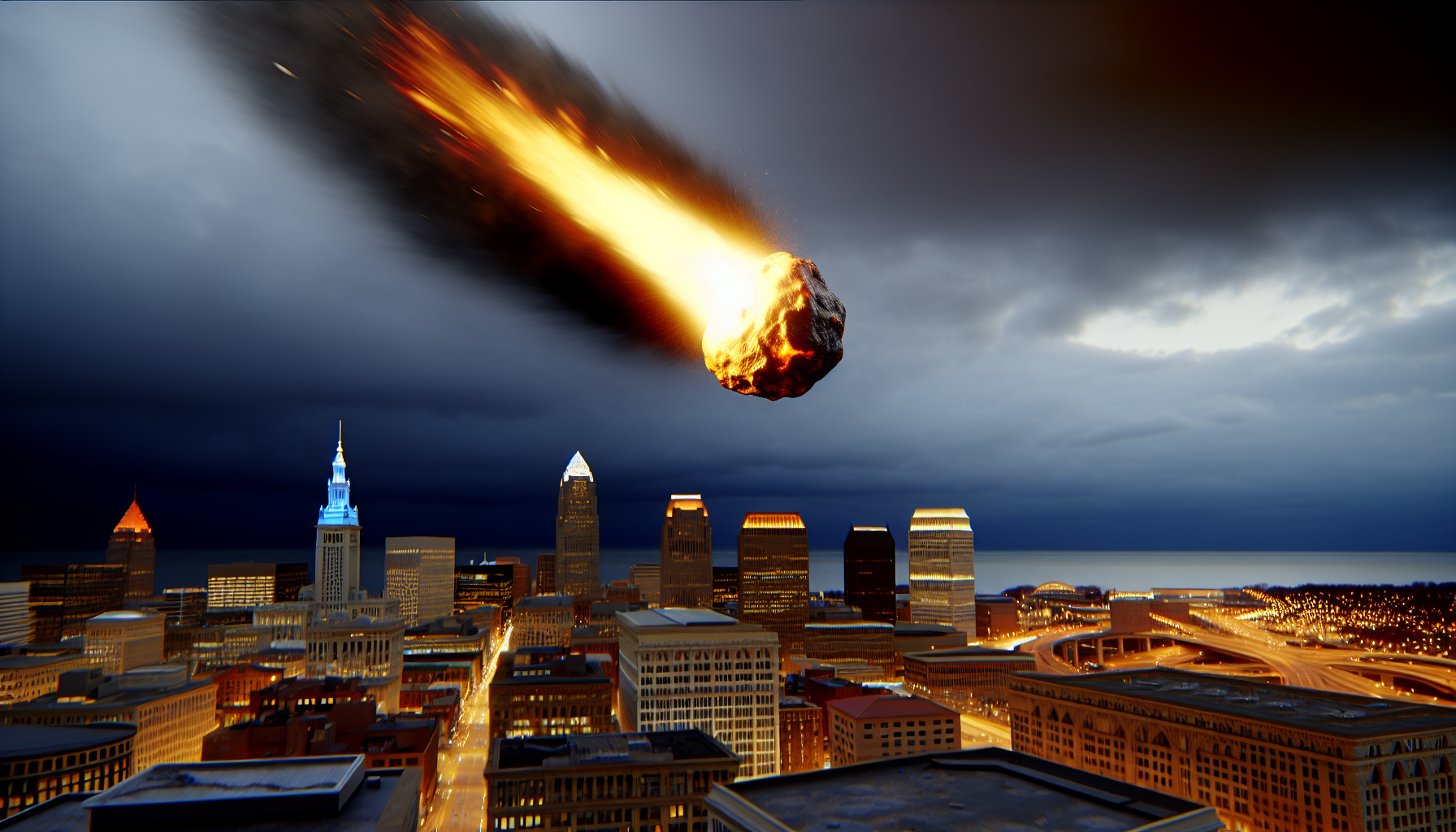
It was just before 9 a.m. on Tuesday, when a blazing object swept across the skies above Cleveland. In an instant, a deafening boom rattled homes, windows shook, and residents across Northeast Ohio—stretching from Sandusky to Lake County—looked skyward in disbelief.
The Fireball in the Sky
According to NASA and the American Meteor Society, what people saw blazing overhead was a meteor weighing approximately 7 tons and measuring about 6 feet (1.83 meters) in diameter. It ripped through the atmosphere at around 45,000 miles per hour (about 72,420 km/h). The travel path began roughly 50 miles above Lake Erie near Lorain, before the meteor streaked more than 34 miles (55 km) and ultimately fragmented over Valley City, just north of Medina.
The Sonic Boom and Explosive Energy
As the meteor tore through the sky, it unleashed energy equivalent to about 250 tons of TNT—enough to generate a severe shockwave that produced the loud boom felt for miles. The National Weather Service in Cleveland confirmed that multiple communities felt vibrations and heard a blast-like noise that many feared was an explosion.
Where It Was Seen—and How Far Away
- The glowing fireball was visible across Northeast Ohio and even as far away as Wisconsin and Maryland.
- Residents in cities such as Avon, Mentor, Lorain, and Sandusky reported hearing, feeling, or simply witnessing the phenomenon—some saying their homes shook.
- Despite widespread reports, officials say no large fragments have been found so far. Most of the meteor likely burned up in the upper atmosphere or disintegrated during the high-speed breakup.
Is This Unusual?
Meteor events like this aren’t daily news—but they also are not unheard of. Small meteoroids enter Earth’s atmosphere somewhere in the U.S. practically every day, and very small bits of space dust reach the ground even more often. What makes this event special is the size, the brightness, and the audible boom. Fireballs—meteors that explode with visible light—arouse widespread attention when they happen in populated areas.
Official Confirmation and Sources
National Weather Service officials used satellite imagery to confirm the meteor’s path and the resultant shock wave. They also clarified that the object did not make landfall—no crash site, no impact crater, no large debris found. Astronomers and meteorologists remain vigilant for reports of smaller fragments, but as of now, none have been recovered.
What Residents Experienced
From a low rumbling that preceded the loud boom, to the tremors shaking windows and the weird, echoing acoustic aftereffects—many describe this as more than just a loud noise. It was an event people felt in their bones. Some thought it was thunder, an explosion, or even a jet breaking the sound barrier.
Lessons from the Sky
Even when a meteor doesn’t reach the ground, events like this remind us that Earth is still very much connected to what lies above. Thanks to improved monitoring via weather satellites, dedicated cameras, and reports from ordinary folks with smartphones, we learn more every time something like this happens.
For now, this meteor serves as a dramatic wake-up call—one fired by nature, not machinery. Keep your eyes on the skies and perhaps always keep your phone charged.


