Paul Thomas Anderson Breaks the Long Oscar Drought with *One Battle After Another*
After 11 nominations, PTA wins Best Picture, Director & Adapted Screenplay. Maya Rudolph presents, supports, celebrates.
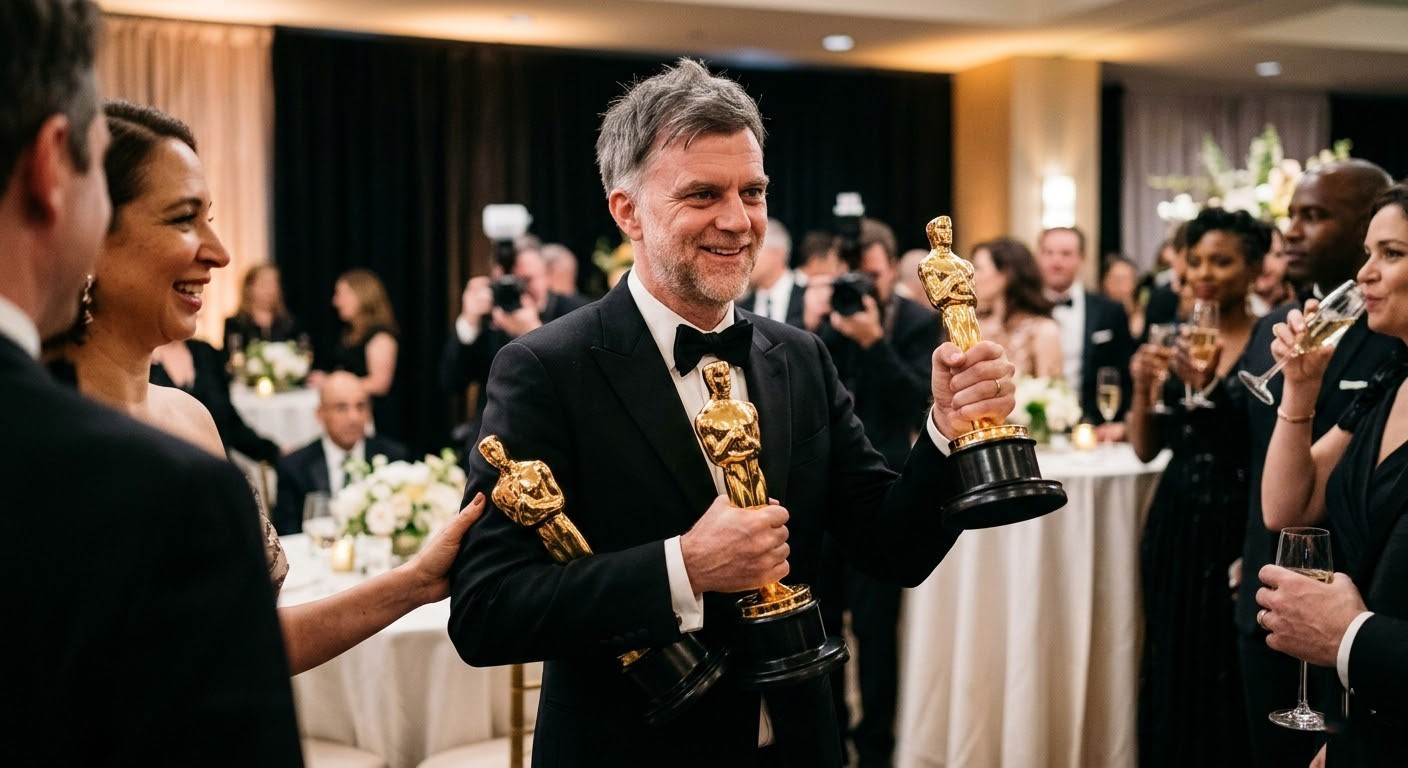
He did it. After decades of anticipation and 11 Oscar nominations without a win, Paul Thomas Anderson finally clinched multiple Academy Awards at the 98th Oscars for One Battle After Another. The film didn’t just take home the top prize—PTA made history in more ways than one. Along the way, Maya Rudolph stood beside him not just in the spotlight, but shoulders above with her own moments of celebration and contribution.
Potent Wins for PTA — Six Oscars, Firsts, and Major Milestones
On Sunday, March 15, 2026, One Battle After Another dominated the Academy Awards, winning six Oscars total. Among those, PTA won his first-ever Oscars—Best Director and Best Adapted Screenplay—and, as producer, accepted the Best Picture award. It’s a rare feat: in Oscar history, only a handful of filmmakers have won those three major awards in one night. This is the moment that many critics and industry insiders thought was inevitable after the film swept critics awards all season. The film also broke new ground by winning the first-ever Oscar for Best Casting, a category recently added to the Academy’s awards roster.
The movie didn’t just ride to victory on back-to-back wins—it stood tall as the most awarded motion picture of the ceremony. Its six statues placed it at the top, outpacing nominations grandee Sinners, which entered with 16 nods but left with fewer wins. One Battle After Another also excelled technically, picking up awards in editing and supporting roles—among them Best Supporting Actor for Sean Penn, who wasn’t present—and Best Film Editing. All told, Anderson’s opus reached beyond prestige: it earned both critical acclaim and cultural impact.
Maya Rudolph’s Night: Presenter, Partner, Pride
Amid the flurry of awards, Maya Rudolph shone from the sidelines. Announced weeks before the ceremony as one of the presenters for the 98th Oscars, she was part of a high-profile lineup that included Rose Byrne, Melissa McCarthy, and Kristen Wiig to honor the 15th anniversary of Bridesmaids. While her role at the ceremony was to lift others up—and she did so with grace—her presence was meaningful.
Rudolph has been Paul Thomas Anderson’s partner since 2001, and the couple share four children. They’ve long kept their personal life out of tabloid swirl, but have celebrated together at awards shows. At the Golden Globes earlier this year, when PTA won Best Screenplay and Best Director for One Battle After Another, Rudolph joined him in that electric moment—two wide-eyed Oscars wins lit up by love, chaos, and champagne. In head-to-toe Chanel, she supported him not just as a partner, but as someone deeply invested in his artistic journey.
Why This Oscar Win Resonates Beyond the Red Carpet
The victory is deeply symbolic. For Anderson, it represents closure. Films like Boogie Nights, Magnolia, There Will Be Blood, Phantom Thread, and Licorice Pizza built his reputation, but none won at the Oscars—until now. Industry watchers had long predicted this moment. At virtually every major precursor—for Best Picture, Best Director, adapted screenplay—the film collected trophies, including Critics’ Choice, the Directors Guild, BAFTA, and nearly every major critics’ circle. The momentum, both statistical and emotional, was white-hot.
And for the Academy, the additions made this year are signs of evolving recognition. Best Casting became an official category—finally honoring casting directors alongside writers, cinematographers, actors, and others. PTA’s film took that first award. Meanwhile, One Battle After Another also became Anderson’s highest-grossing film, its box office crossing $200 million globally—another milestone for a filmmaker whose work is often seen as art first, commerce second.
Looking Ahead: Legacy, Lessons, Love
Paul Thomas Anderson’s wins cleanse decades of near-misses. It’s not just the trophies—it’s the narrative arc: a filmmaker who toiled, sublimated, explored vast swaths of human character, finally recognized. And Maya Rudolph, ever steady, ever present, continues to elevate the parts of the moment that are easy to miss—the love, the grounding, the support.
This timing matters. As Hollywood debates whose stories count, PTA’s film—a sweeping, politically conscious epic rooted in character—cuts against the grain of spectacle-heavy blockbusters or streaming-first formulas. His victory is a reminder of craft still being honored, narratives still mattering, and art still capable of shaking norms.
In the end, the Oscars weren’t just a win for Anderson—they were a long-overdue reckoning. And through it all, Maya Rudolph reminded the world that while the spotlight is bright, the heart of creating is often together.


