Top Travel Destinations in Germany: 15 Best Places for 2025
Top Travel Destinations in Germany: 15 Best Places for 2025 ClubRive …
Top Travel Destinations in Germany: 15 Best Places for 2025
TL;DR:
- Germany fits many styles in one trip.
- Spring and fall bring mild weather and lighter crowds.
- December is great for markets and winter vibes.
- Trains connect most places fast and on time.
- Use our table and checklist to plan in minutes.
Germany is compact, but varied. You can mix cities, castles, wine towns, and mountains in one loop. Start with one city hub, then add a nature region within a 2 to 4 hour train ride.
Germany’s climate is temperate and fairly steady across the year, with rain spread through all seasons, warm summers, and cool winters, according to the German National Tourist Board. Spring and fall offer comfortable days and fewer crowds, while summer has long daylight. December adds Christmas markets and winter scenes.
Best places at a glance
| Place | Best for | Ideal months |
| Berlin | History, museums, nightlife | April to June, September to October |
| Munich | Beer halls, parks, day trips | May to June, September |
| Bavarian Alps & Neuschwanstein | Lakes, hikes, alpine views | June to September, December for snow |
| Hamburg | Waterfront, music, Speicherstadt | May to September |
| Cologne & Upper Middle Rhine | Cathedrals, castles, river cruises | May to September |
| Dresden & Saxon Switzerland | Baroque art, sandstone cliffs | May to June, September |
| Heidelberg | Romantic old town, Neckar views | April to June, September |
| Nuremberg & Franconia | Old towns, beer, markets | May to June, December |
| Black Forest & Baden-Baden | Spas, pine forests, cakes | May to September |
| Lake Constance | Cycling, boat trips, Alps backdrop | May to September |
| Moselle Valley | Wine villages, gentle hikes | May to September |
| Romantic Road | Storybook towns, road tripping | May to September |
| Harz Mountains | Half-timber towns, steam trains | June to September, December |
| Baltic Coast, Rügen & Usedom | Beaches, chalk cliffs, islands | June to August |
| Potsdam & Sanssouci | Palaces, gardens, near Berlin | May to September |
The 15 best travel destinations in Germany
1) Berlin
Why go: World-class museums, street art, and layered history. Walk Museum Island, the Reichstag dome, and the Berlin Wall memorials.
Tips: Base near Mitte or Prenzlauer Berg for fast transit. Many key sites cluster around Museum Island, one of Germany’s UNESCO areas.
2) Munich
Why go: Green parks, beer gardens, and day trips to lakes and mountains. The English Garden is perfect on warm days.
Tips: Trains reach Salzburg, Regensburg, and Garmisch fast. Shoulder months avoid peak hotel rates, says Lonely Planet.
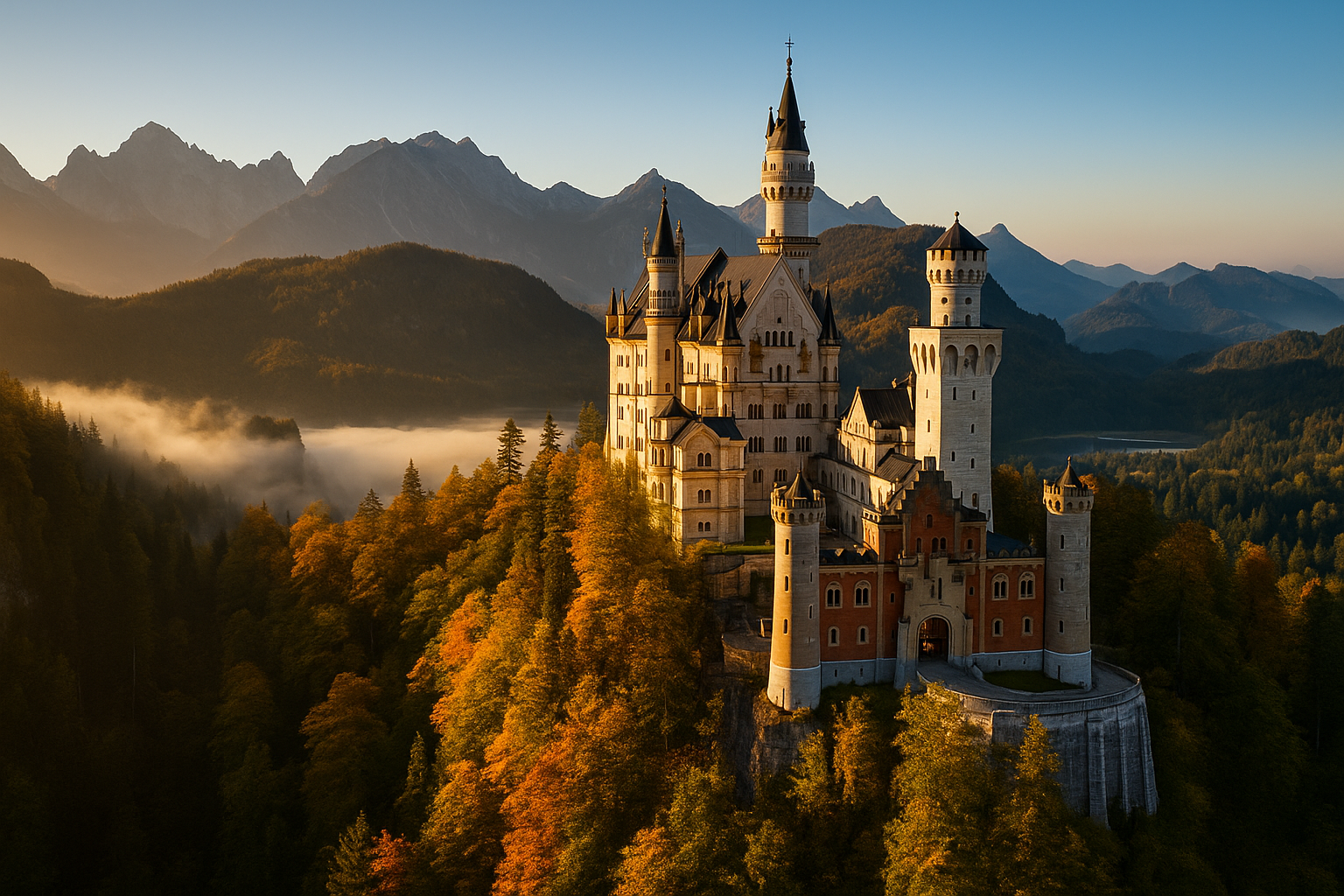
3) Bavarian Alps and Neuschwanstein
Why go: Alpine trails, emerald lakes, and a fair-tale castle view near Füssen.
Do not miss: Boat on Königssee or ride the cable car near Zugspitze in season. Neuschwanstein and other royal sites hold UNESCO recognition as of 2025. entry well ahead in summer.
4) Hamburg
Why go: A lively port city with canals, great music, and Speicherstadt’s brick warehouses. Miniatur Wunderland is a crowd-pleaser for families. The official Top 100 list ranks it highly.
Stay: HafenCity or St. Georg for easy walks to the water.
5) Cologne and the Upper Middle Rhine Valley
Why go: Cologne Cathedral’s soaring Gothic nave and a river lined with castles and vineyards. The Upper Middle Rhine is a UNESCO landscape.
Tip: Base in Bacharach or Boppard for slow days and quick boat hops.
6) Dresden and Saxon Switzerland National Park
Why go: Rebuilt Baroque gems on the Elbe, and wild rock formations an hour south.
Do not miss: The Zwinger, Frauenkirche, and a hike to the Bastei Bridge above the river. Lonely Planet highlights the area for scenery and easy access.
7) Heidelberg
Why go: Romantic castle ruins over the Neckar, student pubs, and a long riverside path.
Tip: Climb the Philosophers’ Walk for sunset photos with the Old Bridge below.
8) Nuremberg and Franconia
Why go: Medieval walls, a striking castle, and hearty food. Nearby Bamberg adds canals and smoked beer, with a UNESCO-listed old town.
When: December is charming for markets and half-timber squares.
9) Black Forest and Baden-Baden
Why go: Pine-scented trails, spa culture, and small towns like Triberg and Gengenbach. Baden-Baden’s baths are perfect after a hike. Lonely Planet’s guides cover routes and highlights.
Tip: Try Black Forest cake where cherries grow nearby.
10) Lake Constance
Why go: Cycle lakeside paths, hop to Mainau’s flower island, and watch the Alps rise across the water.
When: May to September brings long daylight and boat schedules.
11) Moselle Valley
Why go: Calm river bends, slate-soiled vineyards, and castles over villages like Cochem. Trier, Germany’s oldest city, sits near the western end.
How: Use trains and boats to link wine towns without a car.
12) The Romantic Road
Why go: A classic route from Würzburg to Füssen, with walled towns and churches. Rothenburg ob der Tauber feels like a set from a storybook. Germany’s Top 100 names it a favorite stop.
Tip: Spend a night inside the walls for quiet mornings.
13) Harz Mountains with Quedlinburg and Wernigerode
Why go: Timbered old towns and steam trains chugging to the Brocken summit.
Good to know: Trails are well marked and fit for families.
14) Baltic Coast, Rügen und Usedom
Why go: Long beaches, seaside spas, and white chalk cliffs on Rügen’s Jasmund. Germany Travel notes the Baltic shore enjoys many sunny hours, with islands like Usedom a good bet in summer.
Tip: Book strandkorb beach chairs for a lazy day.
15) Potsdam and Sanssouci
Why go: Palaces and gardens that once hosted Prussian kings. Sanssouci Park forms part of a UNESCO ensemble near Berlin.
How: It is a short regional train hop from Berlin Hauptbahnhof.
When to go, by travel style
- City breaks: April to June, September to October. Mild days, easy walking.
- Hikes and lakes: June to September for long light. Expect afternoon showers in the Alps.
- Wine trips: May to September on the Rhine and Moselle. Harvest season feels festive.
- Christmas markets: Late November to late December. Book early for Nuremberg, Dresden, and Cologne. Lonely Planet and Germany Travel both spotlight winter magic.
Getting around
Germany’s rail network links nearly every place on this list. Most legs take 1 to 4 hours. Use ICE for long hops and regional trains for short links. Many small towns work best by bus or bike once you arrive.
Sample 7- to 10-day routes
Classic first-timer loop, 8 days
Berlin 3 nights, train to Dresden 1 night, Munich 3 nights, day trip to Neuschwanstein or Salzburg, fly out of Munich.
Castles and wine, 9 days
Frankfurt 1 night, Rhine Valley 2 nights, Moselle 2 nights, Heidelberg 1 night, Rothenburg 1 night, Munich 2 nights.
North coast, 7 days
Hamburg 3 nights, train to Rügen 2 nights, finish in Lübeck 2 nights for marzipan and brick Gothic.
Practical tips that save time
- Buy long-distance train tickets early for lower fares.
- Pack layers and a small umbrella in any month. Germany Travel notes rain is spread across the year.
- Sunday store hours are limited. Plan grocery runs for Saturday.
- Cards work most places, but small cash helps at kiosks and market stalls.
- Book Neuschwanstein entry and Rhine boats ahead in peak months.
Common mistakes
- Overpacking cities in one trip. Two or three hubs are enough.
- Driving the Romantic Road in one day. Spend a night inside the walls.
- Expecting Mediterranean heat on the Baltic. Nights can feel cool, even in July.
- Skipping museum reservations in Berlin during holidays.
Why it matters
Germany gives you range. In one week you can pair top museums with forest hikes and wine towns. Picking places by vibe and season saves time and money. It also helps spread visits beyond the hotspots, which supports local communities and eases pressure on crowded sites.
Handy pre-trip checklist
- Passport valid 6 months past return date
- Reserve first and last nights
- Prebook rail legs over 3 hours
- Download offline maps and DB Navigator
- Pack light rain jacket and layers
- Book castle, museum, and boat tickets in season
- Carry a small cash stash for markets
Sources:
- Germany Travel, “Information on Germany: climate and travel basics,” https://www.germany.travel/en/information-on-germany.html, accessed 2025-09-11.
- Lonely Planet, “Germany travel guide,” https://www.lonelyplanet.com/destinations/germany, accessed 2025-09-11.
UNESCO World Heritage Centre, “Germany — World Heritage List,” https://whc.unesco.org/en/statesparties/de, accessed 2025-09-11.


