Top 10 U.S. Spots to Witness the Full Blood Moon Total Lunar Eclipse March 3
Best U.S. locations where the March 3 total lunar eclipse will shine brightest. Plan your pre-dawn viewing now.
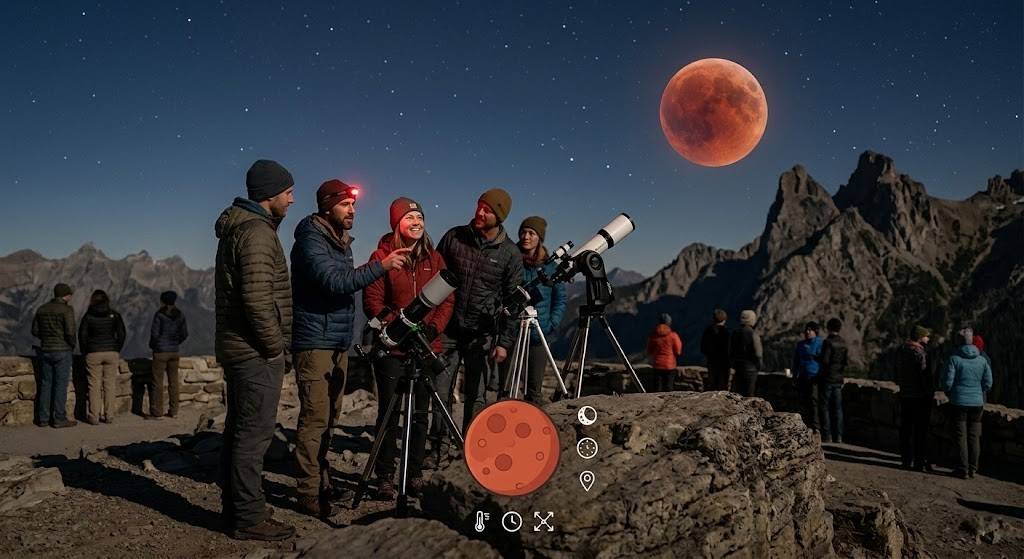
Don’t let your alarm go unheard—just before dawn on Tuesday, March 3, 2026, the skies over part of the U.S. will light up with a rare Blood Moon. For 58 intense minutes during totality, the full moon will slide entirely into Earth’s shadow and glow copper-red. It’s the last full lunar eclipse visible from all of North America until late 2028. Here are ten top locations—across desert, mountain and coastline—that offer ideal conditions to catch every second.
When & What You’ll See
The eclipse begins at 3:44 a.m. EST for penumbral shadow, moves to partial at 4:50, then reaches totality between 6:04 and 7:03 a.m. EST. In the Pacific Time Zone, that’s roughly 3:04 to 4:02 a.m. when the moon turns blood-red.
The full span lasts about 5 hours and 40 minutes from start to finish—with visibility depending on your location, local weather and how far west you are. Eastern U.S. locations may see moonset or sunrise encroach during or just after totality; western states get the fullest views. Clear dry skies will make the difference between full spectacle and cloudy letdown.
10 Best U.S. Viewing Spots
- Grand Canyon National Park, Arizona – Classic Arizona desert vistas and dark skies. Points like Mather Point and the South Rim offer sweeping horizons. Cloud cover tends to be minimal this time of year.
- Death Valley National Park, California – One of the darkest national parks in the U.S. Expect clear, crisp air and unhindered views in places like Zabriskie Point and Mesquite Flat Sand Dunes.
- Anza-Borrego Desert State Park, California – Southern desert terrain, clear skies, very low light pollution. Ideal for long exposures of the red moon paired with early dawn hues.
- Joshua Tree National Park, California – Stark desert landscapes and iconic silhouettes. An overnight camp or a remote viewpoint could put you right in totality with skywide views.
- Saguaro National Park, Arizona – Sonoran desert spectacle. The east section offers wide open horizons toward the southwest—perfect for moonset viewing in silence and solitude.
- Big Island, Hawaii – Virtually non-stop darkness, very little atmospheric interference. Coastal areas, elevated viewpoints like Mauna Kea, offer spectacular overhead views.
- Horsetooth Mountain Open Space, Colorado – Elevated terrain with clean, open vistas. Framed by Rockies, this is a choice site if you’re after clarity and altitude.
- Pacific Northwest Coast (e.g., western Washington, Oregon) – With skies above the Pacific, these spots often see early morning clarity and the horizon contested by ocean glare—dramatic and rewarding.
- Denver, Colorado – While moonset and twilight may intrude, many western Colorado locations will enjoy the full totality before dawn. City outskirts will offer best horizon views.
- Western Oregon & Northern California Deserts – Regions inland and east of coastal fog zones stand a strong chance of clear skies, letting moonlight dominate before sunrise.
Weather & Visibility Tips
Weather is often the wild card. Forecasts show parts of Michigan expect 60–80% cloud cover at totality, dampening the view there. Most spots in the western U.S. and Southwest should have much better odds of clear, dry skies.
Arrive early—an hour before totality gives you time to scout an unobstructed horizon. Pack layers: late-night early-morning temperatures in deserts and high altitudes will be cold. Remember, no eclipsing glasses needed—it’s safe to look, binoculars just enhance shadow detail.
Final Checklist Before the Blood Moon
- Choose dark skies away from city lights. National parks, reserves, and rural slots pay off.
- Check horizon visibility—moon may sit low, near trees, buildings, or mountains.
- Watch the clock: totality is short—58 minutes at peak. Know your local times.
- Bring binoculars or camera if you want texture, but your naked eyes will see the core drama.
This blood-red full moon rises as a quiet masterpiece. From the dunes of Death Valley to the crags of the Grand Canyon, from Hawaiian coasts to the desert blossoms of Joshua Tree—some of the best stages are right in front of you. Wake before dawn, dress warmly, and don’t miss it.


