What helps with diarrhea and vomiting: fast, safe relief
What helps with diarrhea and vomiting: fast, safe relief ClubRive …
What helps with diarrhea and vomiting: fast, safe relief
TL;DR:
- Rehydrate first with oral rehydration solution, not plain water.
- Keep eating small, simple meals as tolerated. Skip high sugar and alcohol.
- Kids under 5 benefit from zinc for 10–14 days.
- Loperamide or bismuth can help adults without fever or blood. Avoid anti-diarrheals if stools are bloody.
- Seek urgent care for dehydration signs, blood, high fever, severe pain, or in pregnancy.
What causes diarrhea and vomiting
A short stomach bug is the most common cause. Norovirus leads many cases worldwide, especially in winter. Symptoms start within 12 to 48 hours and usually last 1 to 3 days. Handwashing with soap protects better than sanitizer.
Food poisoning and some bacteria can also trigger symptoms. Travel, new foods, and some medicines may play a role. Bloody stools, high fever, or severe pain suggest a bacterial cause that needs medical care.
First priority: prevent dehydration
Lost fluid and salts cause weakness, dizziness, and dark urine. Replace both water and electrolytes.
- Use oral rehydration solution, ORS. It has the right blend of salt and glucose to pull fluid into the body. Commercial packets are ideal, and are safe for all ages.
- Sip often. Take small sips every 5 to 10 minutes if you are still vomiting. Increase as nausea eases.
- Sports drinks alone are not enough. They lack the correct salt and glucose balance. ORS works better for diarrhea.
Simple homemade ORS if packets are not available
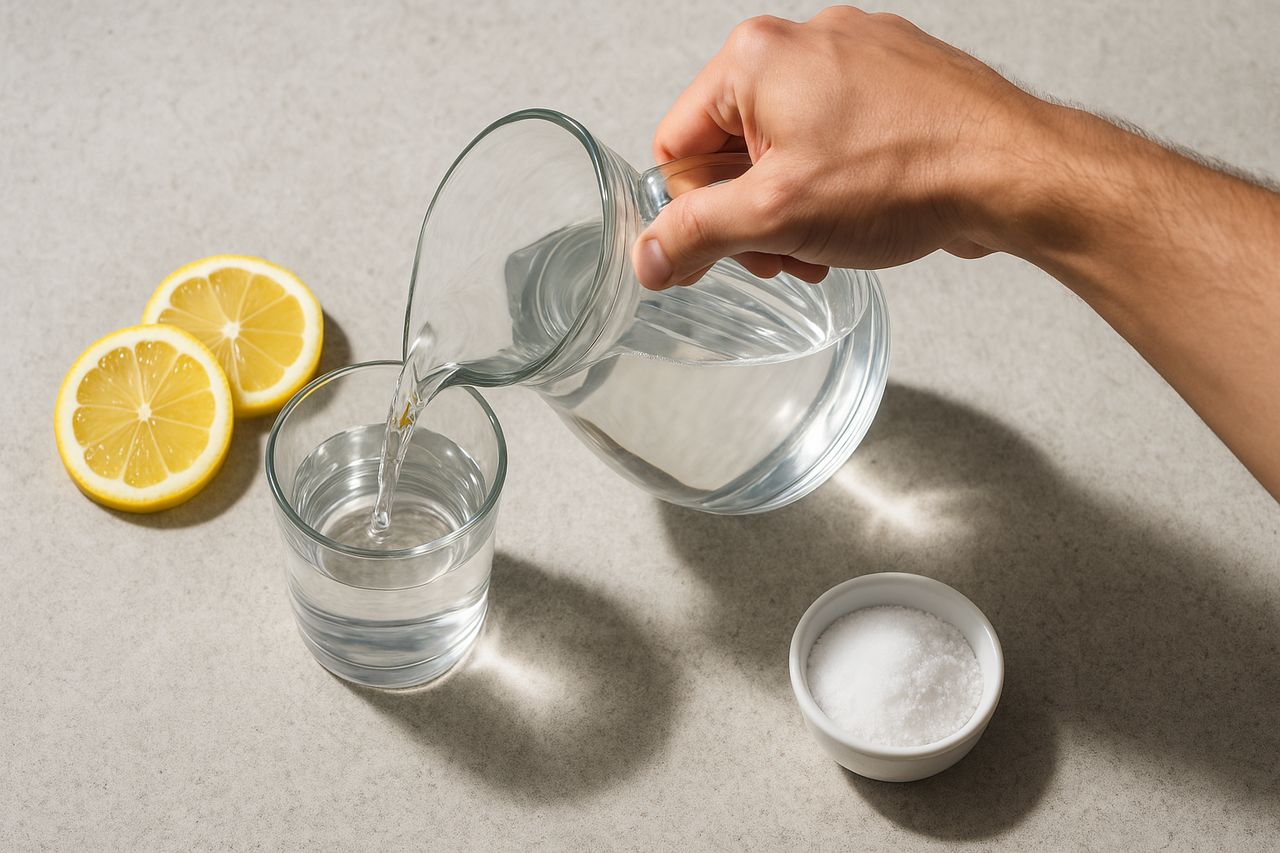
Mix 4 cups, about 1 liter, of clean water with ½ teaspoon table salt and 2 tablespoons sugar. Stir until fully dissolved. Chill if preferred. This matches practical patient guides used by health systems. Measure carefully to avoid too much salt.
Typical amounts per hour while awake
- Children: 5 to 10 ml per kg body weight per hour, small sips.
- Adults: Aim for 1 to 2 cups per hour, more if stools are frequent.
If vomiting happens, wait 10 minutes, then restart with tiny sips.
What to eat and what to skip
Once vomiting slows, start small, easy meals.
- Good options: rice, bananas, toast, crackers, plain yogurt, oats, eggs, soups.
- Add protein as you can, such as yogurt, tofu, chicken, or lentils.
- Avoid high fat, very spicy, or very sugary foods early on.
- Skip alcohol and limit caffeine until you are well.
There is no need to starve. Gentle food supports recovery.
Medicines that can help, and when to avoid them
For diarrhea
- Loperamide can reduce stool frequency in adults with nonbloody, afebrile diarrhea. Do not use if you have blood in stool or high fever, since this can worsen some infections such as Shigella.
- Bismuth subsalicylate helps with diarrhea and nausea in adults. It can darken stools and tongue. Avoid if you are pregnant, allergic to aspirin, on blood thinners, or giving it to children due to Reye risk. Follow label dosing.
For travelers’ diarrhea, self care often includes fluids plus loperamide or bismuth for symptoms. Antibiotics are not needed for mild cases. Seek care for severe cases or if you are in a high risk group.
For vomiting
- Ondansetron can be prescribed. A single dose in children with mild to moderate dehydration can reduce vomiting and the need for IV fluids. Some children may pass more stools after a dose. Ask a clinician before use.
- At home, try ginger tea, cool clear soups, and small frequent sips of ORS. Sit upright. Fresh air may help nausea.
Zinc for young children
Children under 5 with watery diarrhea benefit from zinc for 10 to 14 days. Doses are 10 mg daily if under 6 months, 20 mg daily for ages 6 months to 5 years. It shortens illness and may prevent future episodes. Ask a clinician or pharmacist about local products.
Hygiene that stops spread
- Wash hands with soap and water for 20 seconds, especially after toilet use and before eating or cooking. Sanitizer is less effective against norovirus.
- Clean and disinfect high touch surfaces.
- Do not prepare food for others while sick and for at least 2 days after symptoms stop.
When to seek medical care
Get urgent care now if any of these occur:
- Signs of dehydration, such as very dry mouth, no tears, minimal urine, dizziness, or confusion.
- Blood in stool or black stools.
- High fever, 39 C or higher, or fever lasting more than two days.
- Severe belly pain, stiff neck, severe headache, or rash.
- You are pregnant, elderly, have heart, kidney, or immune problems, or you recently returned from travel and feel very unwell.
People with bloody diarrhea should not take loperamide or diphenoxylate. They need medical review.
Special cases
Babies and toddlers
Offer ORS with a spoon or syringe in tiny amounts every few minutes. Keep breastfeeding or giving formula. Watch diapers for wetness. Get care quickly if a child drinks poorly, is hard to wake, or has no urine for 6 hours.
Older adults
They dehydrate faster. Set a timer to sip ORS often. Check medicines with a clinician, especially diuretics and ACE inhibitors.
During travel
Pack ORS packets, a thermometer, and hand soap sheets. Follow food safety rules. Use bottled or boiled water in areas with unsafe supplies. For severe diarrhea with fever on a trip, seek care.
Quick checklist
| Goal | What to do | How often | Notes |
| Rehydrate | ORS sips, increase as tolerated | Every 5–10 minutes at first | Sports drinks are not enough. |
| Ease nausea | Rest, small sips, clear soups | Hourly | Ask about ondansetron if needed. |
| Control diarrhea | Loperamide or bismuth for adults without fever or blood | Per label | Avoid anti-diarrheals if stools are bloody. |
| Support recovery | Light meals, then normal diet | As tolerated | Add protein and complex carbs |
| Protect others | Handwashing, disinfection, stay home 48 hours after last symptom | Daily | Soap works better than sanitizer for norovirus. |
Why it matters
Most stomach bugs resolve in a few days. The biggest risk is dehydration. ORS, simple food, and smart use of medicines keep you safe. Knowing the red flags helps you get timely care and avoid complications.
Sources:
- World Health Organization, Diarrhoeal disease fact sheet, https://www.who.int/news-room/fact-sheets/detail/diarrhoeal-disease, March 7, 2024
- CDC, About norovirus and hydration advice, https://www.cdc.gov/norovirus/about/index.html, April 24, 2024
- CDC, Norovirus Facts and Stats, https://www.cdc.gov/norovirus/data-research/index.html, May 8, 2024
- CDC, Treatment of Shigella infection, https://www.cdc.gov/shigella/treatment/index.html, March 15, 2024
- CDC Yellow Book 2026, Traveler’s diarrhea, https://www.cdc.gov/yellow-book/hcp/preparing-international-travelers/travelers-diarrhea.html, April 23, 2025
- Cochrane, Anti-sickness medication for vomiting in acute stomach upsets in children, https://www.cochrane.org/evidence/CD005506_anti-sickness-medication-vomiting-acute-stomach-upsets-children, September 1, 2021
- StatPearls, Bismuth subsalicylate, https://www.ncbi.nlm.nih.gov/books/NBK560697/, 2024
- University of Virginia Health, Homemade ORS recipe, https://med.virginia.edu/ginutrition/wp-content/uploads/sites/199/2023/12/Homemade-Oral-Rehydration-Solutions-11-2023.pdf, November 2023
- Alberta Health Services, ORS recipes, https://www.albertahealthservices.ca/assets/info/nutrition/if-nfs-ors-recipes.pdf, October 2024
- WHO eLENA, Zinc for diarrhea, https://www.who.int/tools/elena/interventions/zinc-diarrhoea, accessed September 25, 2025


