Travel panic disorder plan: simple tools for crowded places
Travel panic disorder plan: simple tools for crowded places ClubRive …
Travel panic disorder plan: simple tools for crowded places
TL;DR:
- Practice a daily calming breath and a 5-4-3-2-1 grounding drill before you travel.
- Build a written panic plan, with fast steps, meds list, and help numbers. Keep one offline.
- On flight days, cut caffeine, hydrate, and sleep early. Alcohol can worsen next-day anxiety.
- In crowds, use paced breathing, grounding, and exits-first scanning. Move to calmer zones.
- For ongoing panic disorder, CBT and SSRIs are first-line. Arrange refills and a local care plan.
This guide is practical help, not medical care. If you have chest pain, fainting, or think you may be in danger, seek urgent care. For ongoing symptoms, see your clinician before you travel. Cognitive behavioral therapy and certain antidepressants are proven treatments for panic disorder. Plan refills and follow your clinician’s advice.
Dates are current to 22 September 2025.
Build your travel panic plan
Write a one-page plan you can follow when anxious.
- My early signs. List how panic starts for you.
- My first three actions. Example: slow breath, 5-4-3-2-1 grounding, sip water.
- My meds. Names, doses, when to take, and any limits from your prescriber.
- My help list. Travel partner, insurer, local emergency number, embassy or consulate, and your therapist or clinic. The CDC Yellow Book explains how to find care abroad and why to carry insurance details.
- Language card. A short translated note, for example, “I am having a panic attack. I need a quiet seat and water.”
Store it in your phone and as a small paper card.
Practice skills before you fly
1) Calming breathing
Train a daily breath routine so it is automatic in crowds.
- Sit upright, shoulders soft.
- Breathe into your belly through the nose, out through the mouth.
- Count a gentle 4 in, 6 out, for 5 minutes. Longer out-breath lowers arousal. The NHS teaches this as a simple, anywhere drill, and research supports slow diaphragmatic breathing for anxiety relief.
2) Grounding with your senses
Use the 5-4-3-2-1 method to anchor attention: five things you see, four you feel, three you hear, two you smell, one you taste. Practice it on walks so you can use it in queues or stations.
3) Exposure in small steps
If flying or trains trigger panic, rehearse in stages with a therapist. Graduated exposure has strong support for travel fears. Even brief, structured programs help.
Flight-day and transit tactics
- Sleep and food. Aim for regular sleep the two nights before. Eat light, carry snacks, and drink water. The CDC notes travel stress can unmask or worsen mental health symptoms, so preserve basics.
- Limit caffeine. High doses raise anxiety and can trigger panic in people with panic disorder. Switch to low or no caffeine on flight days.
- Skip alcohol. It can disrupt sleep and increase next-day anxiety. If you drink, keep it minimal.
- Arrive early. Extra time reduces pressure. Use quiet rooms or prayer rooms at airports when available.
- Seat strategy. Aisle seats near exits or bulkheads feel less trapped and ease bathroom access.
- Noise control. Use earplugs or ANC headphones and a familiar playlist.
- Movement. Walk and stretch during long waits. Activity helps anxiety management.
In-the-moment toolkit for crowds
- Name it. “This is a panic surge. It will pass.”
- Breathe down. 4 in, 6 out, for 10 to 15 cycles. Hands on belly to slow the rate. NHS guides teach this as a quick reset.
- Ground. Do 5-4-3-2-1. Count items in your language or the local one.
- Change the scene. Step to a wall, end of an aisle, or fresh air if safe. Sit, sip water, cool your face.
- Micro-tasks. Read your plan, send a preset message, or sort tickets. Shifting focus breaks the spiral.
- If symptoms spike. Use your prescribed rescue plan. If new severe symptoms appear, seek medical help.
Medication and documents
- Continue your regular treatment. Do not stop or start medicines without your clinician. First-line long-term treatments for panic disorder are CBT and SSRIs or SNRIs.
- Carry enough for the whole trip plus extra days. Keep meds in original boxes with prescriptions.
- Ask about interactions. Some fast-acting anxiety medicines can impair alertness and interact with alcohol. Discuss fit for travel with your prescriber, and learn any airline or country restrictions. Many practices avoid using sedatives for flying because of safety concerns. Your clinician will guide you.
- Time zones. Set alarms for dose times when you change zones.
- Backup plan. Photograph labels and bring a printed list of names and doses.
Lifestyle choices that help
- Move daily. Short walks or light yoga reduce stress. NHS advice supports exercise for anxiety.
- Watch stimulants. Caffeine can worsen anxiety and provoke panic at high doses. Taper rather than quit suddenly if you are a heavy user.
- Limit alcohol. It may ease nerves short term, then rebound anxiety hits later. Sleep quality also drops.
- Sleep routine. Same wind-down each night. Earplugs and an eye mask help.
- Eat regular meals. Low blood sugar can feel like panic.
Getting help abroad
- Know the local emergency number. Save it on your phone.
- Use your embassy or consulate to locate English-speaking clinicians if needed. The CDC explains how to get assistance and why insurance matters.
- Use telehealth with your home clinician if your plan allows.
- If you feel at risk of harming yourself or others, seek emergency help at once.
What to pack
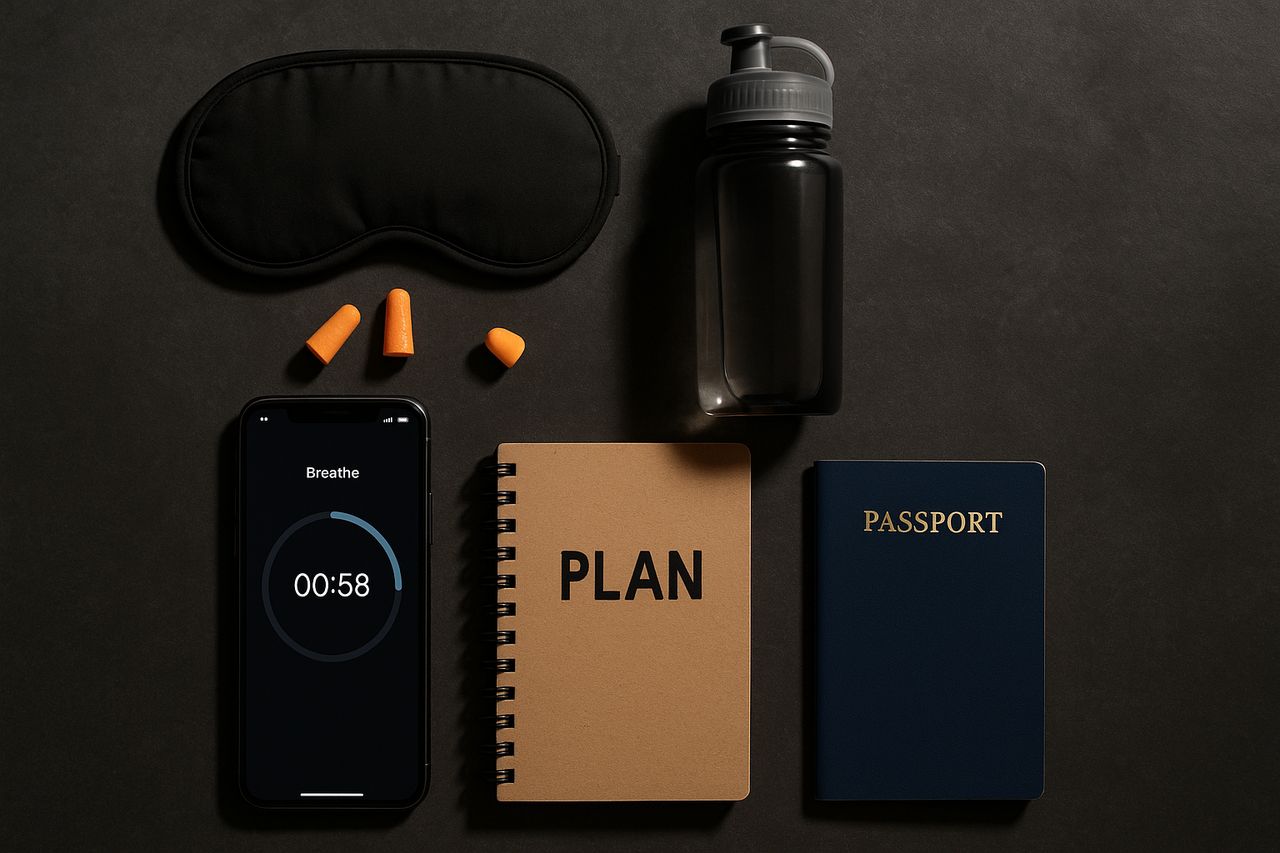
- Noise-canceling headphones or earplugs.
- Eye mask, light scarf or hoodie for a “private bubble.”
- Water bottle.
- Printed panic plan and language card.
- Prescribed meds, copies of scripts, and a small pill organizer.
- Comfort items, like gum or a calming scent.
Why it matters
Panic disorder is treatable. With a written plan, daily skills, and smart travel choices, most people can move through crowded, unfamiliar places and still enjoy the trip. You lower the chance of a spiral, and you recover faster if one starts. Evidence-based habits travel with you.
Sources:
- AAFP, “Generalized Anxiety Disorder and Panic Disorder in Adults,” https://www.aafp.org/pubs/afp/issues/2022/0800/generalized-anxiety-disorder-panic-disorder.html, 1 Aug 2022
- NICE Guideline CG113, “Generalised anxiety disorder and panic disorder in adults,” https://www.nice.org.uk/guidance/cg113, accessed 22 Sep 2025
- NHS, “Breathing exercises for stress,” https://www.nhs.uk/mental-health/self-help/guides-tools-and-activities/breathing-exercises-for-stress/, last reviewed 15 Aug 2022
- CDC Yellow Book, “Mental Health in Travelers,” https://www.cdc.gov/yellow-book/hcp/preparing-international-travelers/mental-health-in-travelers.html, 23 Apr 2025
- CDC Travelers’ Health, “Survival Guide to Safe and Healthy Travel,” https://wwwnc.cdc.gov/travel/page/survival-guide, accessed 22 Sep 2025
- Opensignal/APA exposure references: APA Monitor, “Aviophobia, therapy helps,” https://www.apa.org/monitor/2025/09/aviophobia-fear-flying, Sep 2025; NO-FEAR Airlines RCT, https://pmc.ncbi.nlm.nih.gov/articles/PMC4992303/, 2016
- NHS, “Get help with anxiety, fear or panic,” https://www.nhs.uk/mental-health/feelings-symptoms-behaviours/feelings-and-symptoms/anxiety-fear-panic/, accessed 22 Sep 2025
- Verywell Mind, “5-4-3-2-1 Grounding Technique,” https://www.verywellmind.com/5-4-3-2-1-grounding-technique-8639390, 2024
- Meta-analysis, “Effects of caffeine on anxiety and panic attacks in PD,” https://pubmed.ncbi.nlm.nih.gov/34871964/, 2022; Caffeine and anxiety review, https://www.ncbi.nlm.nih.gov/pmc/articles/PMC10867825/, 2024
- Verywell Health, “Why drinking alcohol could give you anxiety,” https://www.verywellhealth.com/why-drinking-alcohol-could-give-you-anxiety-11686386, Mar 2025
- Chiswick Medical Practice, “Benzodiazepine Prescribing Policy,” https://www.chiswickmedicalpractice.co.uk/medications-prescriptions/medications-for-flying/, accessed 22 Sep 2025
WHO, “Travel and health,” https://www.who.int/health-topics/travel-and-health, accessed 22 Sep 2025


