Best solutions for injuries: first aid, when to go, recover
Best solutions for injuries: first aid, when to go, recover ClubRive …
Best solutions for injuries: first aid, when to go, recover
TL;DR:
- Safety first. Stop major bleeding with firm pressure. Call emergency care for life-threatening injuries.
- For sprains and strains, protect early, load gradually. Ice can ease pain but is not magic.
- Cool burns with running water for 20 minutes. Never use ice or butter.
- Watch head injuries. Seek care fast for danger signs like repeated vomiting or confusion.
- See a clinician for deformity, deep wounds, severe pain, or symptoms that do not improve.
First, protect life
Your first move is scene safety. Check for traffic, fire, or electrical risk. Call your local emergency number for severe injuries. If bleeding is heavy, press firmly with a clean cloth or dressing and keep pressure until help takes over. A tourniquet can be used for life-threatening limb bleeding if you have one and know how to use it, placing it 5 to 7 centimeters above the wound and not over a joint. This buys time and can save a life, according to the American Red Cross.
If a person is unresponsive and not breathing, start CPR if trained. Do not move someone with a suspected spine injury unless the area is unsafe. These steps match public guidance from U.S. agencies and first aid providers.
Soft-tissue injuries: sprain, strain, and bruise
There is no single “best” cure. The goal is to protect the tissue, control pain and swelling, then restore movement and strength.
What to do right away
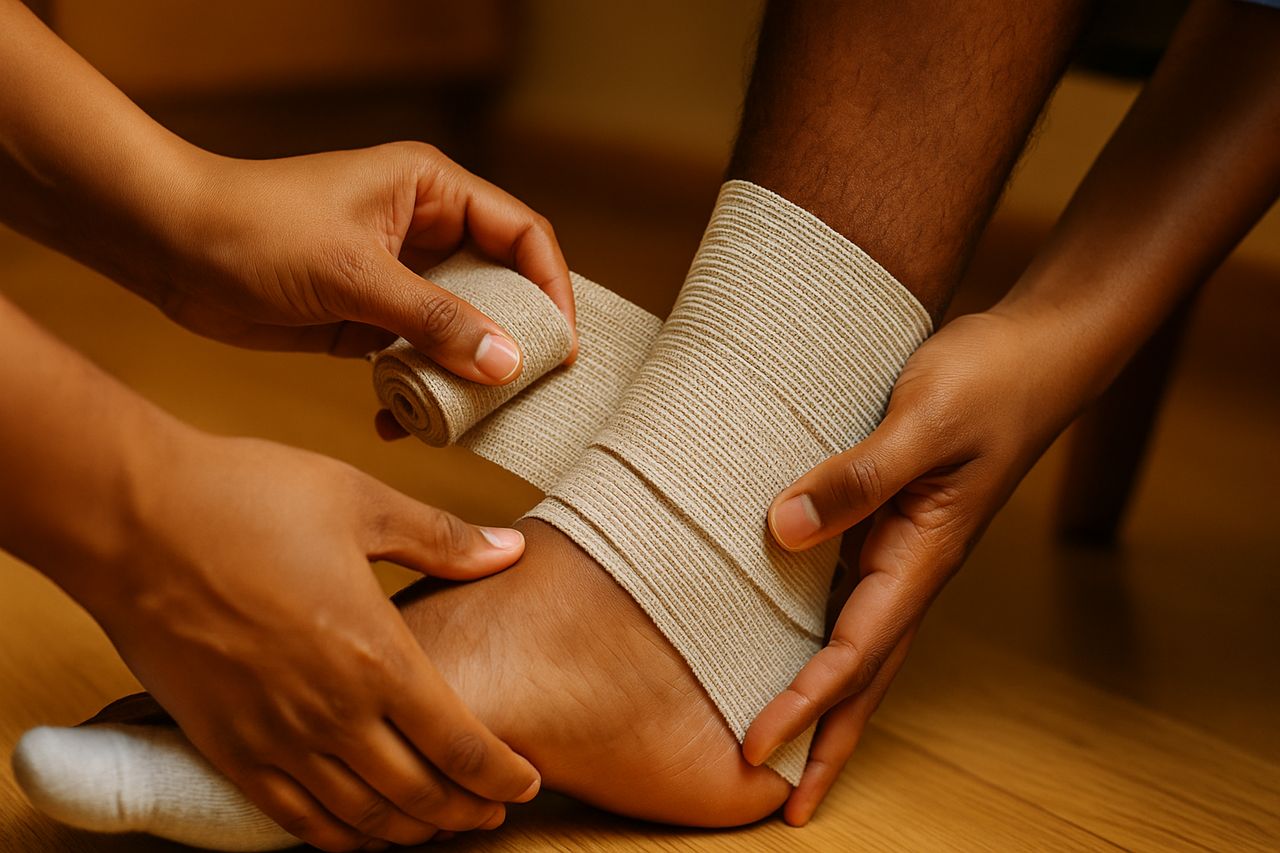
A quick, simple plan still helps at home. Rest the area for a short time, compress with an elastic bandage, and elevate above the heart when possible. Ice can reduce pain for some people in the first 24 to 48 hours. It is optional, not required. Even major clinics still teach RICE as a basic pain-relief method.
What modern guidelines add
Sports medicine authors now suggest “PEACE & LOVE.” In the first days use Protection, Elevation, Avoid anti-inflammatories if advised by your clinician, Compression, and Education. After the acute phase, add Load, Optimism, Vascularization, and Exercise. This approach stresses early, guided loading and patient education, and it reflects current debate about routine icing and early NSAID use. Evidence is evolving, and clinicians still use RICE for pain relief.
When to get help
Get medical care if pain is severe or worsening, swelling is large, you cannot bear weight, or you are not improving after a few days. These warning signs match national health advice.
Burns: act fast and keep it simple
Move away from the heat source. Remove rings and tight items near the area. Cool the burn with cool running water for 20 minutes as soon as possible. Do not use ice, creams, or butter. Cover with a clean, non-stick dressing. Seek care for large burns, deep burns, or burns on the face, hands, feet, genitals, or over joints. These steps come from the National Health Service.
Head injuries and concussion: watch for danger signs
A bump or blow to the head can look mild at first. Get urgent medical care if the person has repeated vomiting, worsening headache, confusion, unusual behavior, slurred speech, weakness or numbness, unequal pupils, seizures, or trouble staying awake. These are danger signs from the CDC’s Heads Up program, updated in September 2025.
Let the person rest and avoid risky activity until a clinician clears them. Return to sport or heavy work should follow a stepwise plan from a professional.
Cuts and bleeding: clean, cover, and watch
After you stop the bleeding with direct pressure, wash hands, then clean the wound with clean water and mild soap if available. Apply a sterile dressing. Use a hemostatic dressing if trained and direct pressure is not enough. Watch for signs of infection like redness, warmth, pus, fever, or worsening pain, and seek care if they appear. Guidance from CDC and Red Cross backs these steps.
Suspected fractures: stabilize and seek care
If a limb looks deformed, is very painful to move, or a bone is through the skin, support the area in the position found, control bleeding, and get urgent care. Do not push a protruding bone back in. Seek emergency care for open fractures, numbness, color change in fingers or toes, or suspected neck, head, or back injury. These indicators are consistent with Mayo Clinic guidance and public health sources.
Recovery basics that speed healing
- Protect but do not baby it. Short rest helps. Prolonged rest can slow recovery. Guided, gradual loading supports better tissue healing.
- Manage pain wisely. Ice and NSAIDs can ease pain and swelling. Some experts limit routine early use for soft-tissue injuries. Ask your clinician, especially if you have stomach, kidney, or bleeding risks.
- Move early within comfort. Gentle range-of-motion exercises prevent stiffness. Increase load when pain is tolerable and swelling is trending down.
- Sleep, nutrition, and hydration. Aim for enough sleep, protein, and produce. These support tissue repair.
- Follow up. If function stalls or pain stays high after a few days, book a visit.
Quick injury decisions table
| Injury or sign | First steps at home | Get urgent care if… |
| Heavy external bleeding | Firm, steady pressure on wound. Use tourniquet for life-threatening limb bleeding if trained. | Bleeding does not stop with pressure, blood is spurting, or you feel faint. |
| Sprain or strain | Short rest, compression, elevation, optional ice for pain. Begin gentle loading as pain allows. | Cannot bear weight, severe pain or swelling, or not improving after a few days. |
| Burn | Cool with running water for 20 minutes. Cover with a clean, non-stick dressing. | Large, deep, or sensitive-area burns, or signs of infection. |
| Head injury | Rest, monitor. Avoid risky activity. | Danger signs like repeated vomiting, worse headache, confusion, unequal pupils, seizures, or trouble staying awake. |
| Suspected fracture | Support in position found. Ice for pain if helpful. | Open fracture, visible deformity, numbness, blue or pale fingers or toes, or suspected neck, head, or back injury. |
When to go straight to the emergency department
- Uncontrolled bleeding despite firm pressure.
- Trouble breathing, chest pain, or severe allergic reaction.
- Deep or gaping wounds, especially on the face or over joints.
- Obvious deformity or bone through the skin.
- Head injury danger signs.
- Severe burns or burns in young children or older adults.
These reflect common red flags in public guidance.
Why it matters
Most injuries are minor, but the first ten minutes shape outcomes. Simple actions like pressure for bleeding, water for burns, and early, guided loading for sprains cut pain and speed recovery. Knowing red flags gets you to care in time. The best solution is the right step for the right injury, taken fast and with confidence.
Mini checklist
- Check safety, call for help if needed.
- Stop heavy bleeding with firm pressure. Use a tourniquet for life-threatening limb bleeding if trained.
- For sprains, protect, compress, elevate, and load gradually.
- Cool burns with running water for 20 minutes. No ice or creams.
- Watch head injuries for danger signs, seek care if any appear.
- Seek care for deformity, severe pain, deep wounds, or no improvement.
Sources:
- CDC, “Signs and Symptoms of Concussion,” updated 2025-09-15, https://www.cdc.gov/heads-up/signs-symptoms/index.html
- NHS, “Burns and scalds – Treatment,” accessed 2025-10-04, https://www.nhs.uk/conditions/burns-and-scalds/treatment/
- American Red Cross, “Bleeding (Life-Threatening External),” accessed 2025-10-04, https://www.redcross.org/take-a-class/resources/learn-first-aid/bleeding-life-threatening-external
- British Journal of Sports Medicine, “Soft-tissue injuries simply need PEACE and LOVE,” 2020, https://bjsm.bmj.com/content/54/2/72
- Cleveland Clinic, “RICE Method: Rest, Ice, Compression, & Elevation,” updated 2025-01-24, https://my.clevelandclinic.org/health/treatments/rice-method


