Artificial sweeteners and brain aging: what science says now
Artificial sweeteners and brain aging ClubRive …
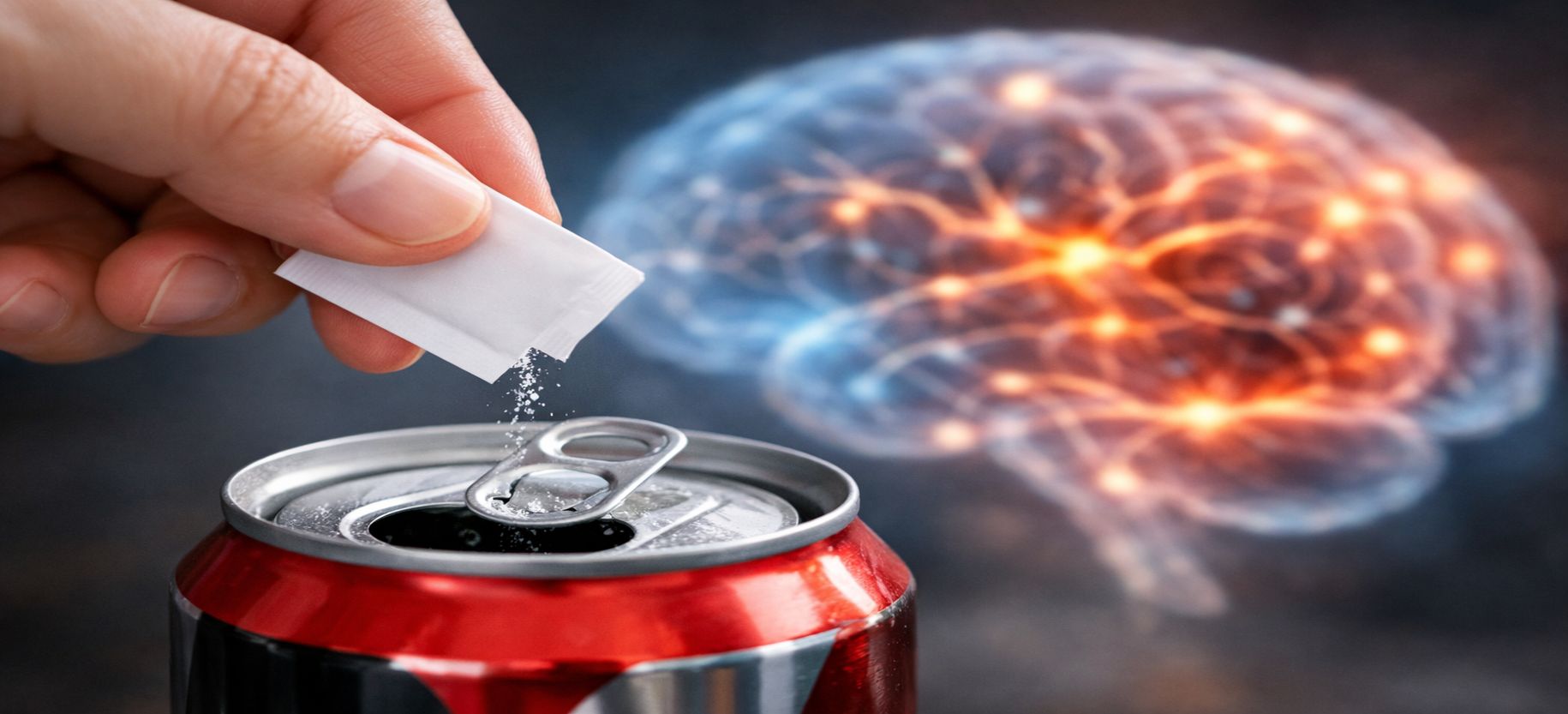
Artificial sweeteners and brain aging
TL;DR:
- Evidence on sweeteners and brain aging is mixed.
- One large study tied diet soda to higher stroke and dementia risk.
- Lab work links aspartame to memory and anxiety changes in mice.
- A human study found sucralose altered insulin and brain responses.
- WHO advises against sweeteners for weight control long term.
Artificial sweeteners are in sodas, yogurts, protein powders, and packets on café tables. Many people ask a simple question. Do they age the brain faster? The short answer is that we do not have proof of brain aging from sweeteners in people. We do have warning signs from human cohorts and lab studies. Here is what to know, and what to do.
The human data so far
Diet soda and dementia or stroke
In 2017, researchers working with the Framingham Heart Study reported that people who drank more diet soda had a higher risk of stroke and dementia over 10 years. The results were published in the journal Stroke and summarized by the U.S. National Heart, Lung, and Blood Institute. The study did not prove cause. It did adjust for many risks, like age, sex, and calories. Still, people who drank at least one diet drink a day had higher event rates than those who rarely drank them.
What does this mean for your brain? The finding flags a possible risk signal, not a final verdict. Diet soda is a bundle of factors. It includes sweeteners, acids, coloring, and drinker habits. The study could not isolate one sweetener. It does tell us heavy intake is not risk free.
Sucralose and brain–metabolic responses in people
In 2020, a controlled trial in Cell Metabolism tested sucralose in healthy adults. When people consumed sucralose with carbohydrate, they showed reduced insulin sensitivity and a blunted brain response to sugar. That pattern might affect appetite control and energy balance. The effect did not appear with sucralose alone. This suggests context matters. What you pair with a sweetener can change its impact.
These metabolic and brain response shifts do not equal cognitive decline. They do show that low or no calorie sweeteners can change how the brain processes sweet taste and nutrients. Over years, that could nudge weight, blood sugar, and vessels, which link to brain health.
The lab evidence that raises concern
Aspartame and behavior or memory in animals
Animal studies let scientists test dose and mechanisms. A 2022 study from Florida State University found that mice given aspartame showed anxiety-like behavior. Remarkably, that effect persisted in later generations that were never exposed. The work appeared in the Proceedings of the National Academy of Sciences.
In 2024, another team reported memory impairment in mice exposed to aspartame, along with changes in hippocampal chemistry and brain growth factor signaling. These pathways are key for learning. While mice are not humans, they provide clues about how sweeteners could affect brain circuits.
Gut microbes and the gut–brain axis
Reviews also point to sweetener effects on the gut microbiome. Shifts in microbes can change inflammation and brain signaling. Evidence is mixed across compounds and doses, but enough studies show change to warrant caution, especially with daily, long-term use.
What major health bodies say
In May 2023, the World Health Organization advised against using non sugar sweeteners to control body weight long term. The guideline drew on trials and prospective studies. WHO found little lasting benefit for weight and signals of possible harm with high intake over time. Weight and metabolic health tie closely to brain aging, so this advice matters.
In July 2023, two WHO-linked bodies reviewed aspartame. IARC labeled it “possibly carcinogenic,” based on limited human data. JECFA kept the acceptable daily intake at 40 mg per kilogram of body weight per day. This is about safety for cancer risk, not cognition, but it underscores ongoing review. National regulators, including the FDA, continue to say aspartame is safe within set limits.
What we can and cannot conclude about brain aging
- There is no direct proof in humans that any one artificial sweetener speeds brain aging.
- Observational data link heavy diet drink intake with higher stroke and dementia risk. That is a warning sign, not proof of cause.
- Controlled human work shows that sucralose can alter insulin sensitivity and brain responses when paired with carbs. This could, over time, influence brain health through metabolic pathways.
- Animal studies show that aspartame can affect behavior and memory pathways. Translation to humans remains uncertain, but the mechanisms are plausible.
Practical guidance to protect your brain
You do not need to fear every packet or can. You can reduce your exposure, improve diet quality, and protect your brain at the same time.
1) Cut frequency, not just swap brands
Aim to move from daily intake to a few times per week or less. Replace routine diet sodas with water, sparkling water with citrus, or unsweetened tea. If you still want sweet taste, try a small amount of sugar with a meal, not on an empty stomach. WHO favors cutting sweetness overall, not just changing the source.
2) Mind the “with carbs” effect
The sucralose trial found changes when sweetener was taken with carbohydrates. If you use sweeteners, avoid pairing them with refined carbs like white bread, pastries, or sugary snacks. Choose fiber rich carbs, like oats or beans, which blunt glucose swings.
3) Build brain healthy habits
- Follow a Mediterranean style pattern. Focus on vegetables, fruits, nuts, legumes, fish, and olive oil.
- Keep blood pressure and blood sugar in range. These are strong brain aging drivers.
- Sleep 7 to 9 hours. Move daily. Do not smoke.
These steps have stronger evidence for brain health than any single ingredient.
4) Read labels the easy way
Look for these names on ingredient lists:
- Aspartame, acesulfame K, sucralose, saccharin, neotame, advantame.
- Sugar alcohols like erythritol and xylitol are different but also very sweet.
If a product tastes very sweet and has zero calories, it likely has a sweetener.
5) Consider a taper plan
If you drink multiple diet beverages per day, try this four week taper.
| Week | Daily target | Swap ideas |
| 1 | Cut one can or bottle | Sparkling water with lemon |
| 2 | Cut a second | Iced tea, unsweetened, with mint |
| 3 | Only one on 3 days | Coffee with milk, no syrup |
| 4 | Only one on 1–2 days | Seltzer with splash of 100% juice |
Track how you feel. Many people report less sugar craving after two to four weeks.
Special cases and common mistakes
- Using sweeteners for weight control alone. WHO found little long term benefit. Focus on whole food habits, not ingredient swaps.
- Thinking “natural” equals safe. Honey and maple syrup still raise blood sugar. Use small amounts with meals.
- Assuming all sweeteners act the same. Effects differ by compound, dose, and context. Avoid blanket claims.
- Ignoring total diet quality. A can of diet soda in a fiber rich diet is different from several cans alongside ultra processed meals.
How to think about “dose”
Regulators set acceptable daily intakes far above typical amounts. For aspartame, JECFA sets 40 mg per kilogram per day. A 70 kg adult would need large daily amounts to reach that. Still, dose builds over time if you use multiple products. Keep intake modest while improving diet quality.
Why it matters
Brain aging is not just about memory tests. It is about years lived with sharp thinking, steady mood, and independence. Sweeteners are not a magic fix for sugar. They can shift metabolism and, in animals, brain pathways. Cutting overall sweetness, improving whole diet quality, and protecting heart and vessel health are the safest bets for your brain.
Bottom line
If you use artificial sweeteners, keep them occasional. Favor water, unsweetened drinks, and whole foods. If you drink diet soda daily, plan a slow cutback. Protect brain health by managing blood pressure, blood sugar, sleep, and exercise. Watch for new, long term human studies that track cognition directly.
Sources:
- WHO, WHO advises not to use non-sugar sweeteners for weight control in newly released guideline, https://www.who.int/news/item/15-05-2023-who-advises-not-to-use-non-sugar-sweeteners-for-weight-control-in-newly-released-guideline, 2023-05-15
- Pase MP et al., Sugar- and Artificially Sweetened Beverages and the Risks of Incident Stroke and Dementia, https://www.ahajournals.org/doi/10.1161/strokeaha.116.016027, 2017-04-20
- Dalenberg JR et al., Short-Term Consumption of Sucralose with, but Not without, Carbohydrate Impairs Neural and Metabolic Sensitivity to Sugar in Humans, https://www.cell.com/cell-metabolism/pdf/S1550-4131%2820%2930057-7.pdf, 2020-04-15


