Find and support local artisans ethically on your next trip
Find and support local artisans ethically on your next trip ClubRive …
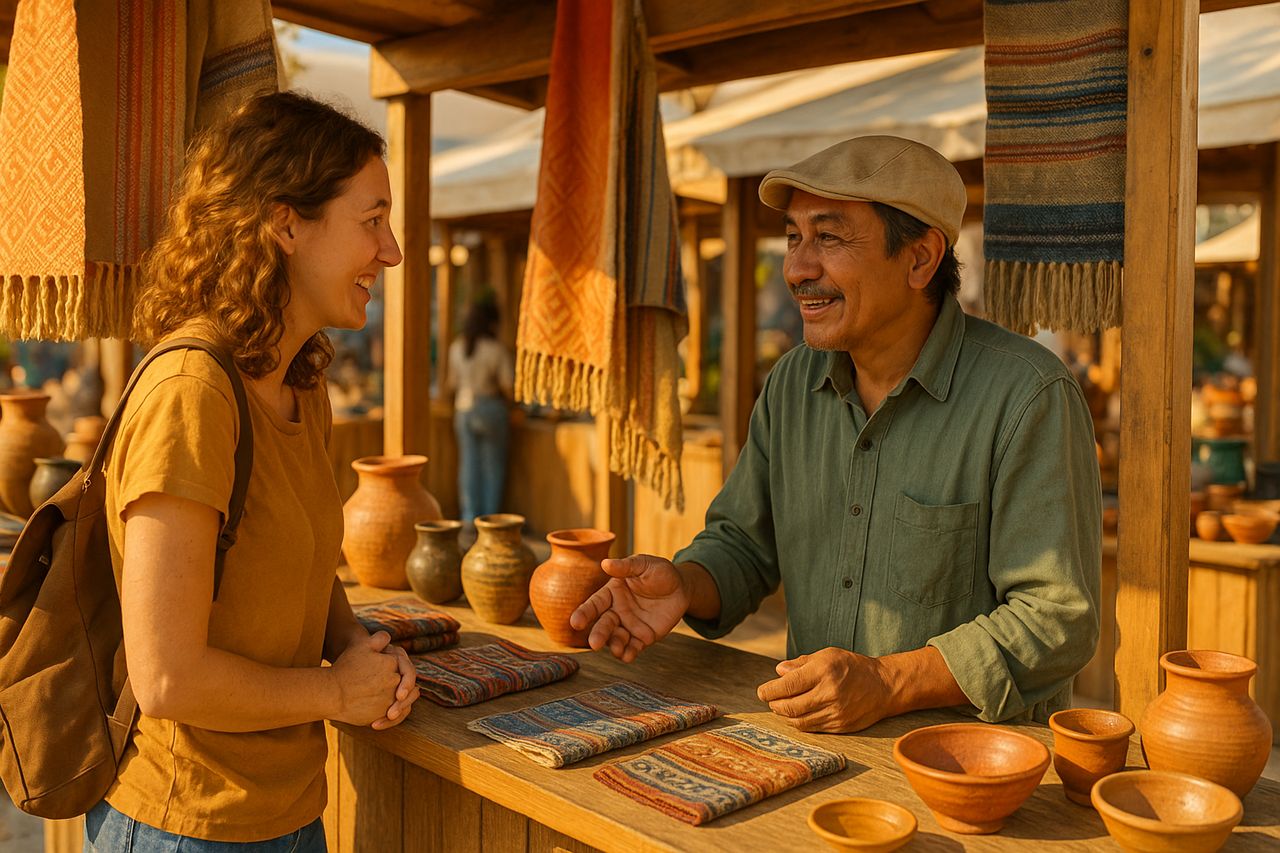
Find and support local artisans ethically on your next trip
TL;DR:
- Start with city cultural lists and artisan co-ops, not souvenir strips.
- Look for fair trade and GI labels. Ask makers about their process.
- Pay in cash or local payment apps when it helps small sellers.
- Avoid wildlife, coral, and shell products. Check rules before buying.
- Tip for demos, ask for receipts, and follow up online for repeat orders.
Your purchase can support real makers or a reseller with a big markup. The difference is how you search, what you ask, and what you avoid. UN Tourism urges travelers to respect hosts and heritage, and to learn before they buy. That leads to better choices and real community impact, not quick trinkets that break. (UN Tourism responsible traveler tips, 2020.)
Dates in this guide reference the current date, 23 September 2025.
Step 1: Find the right leads before you go
- Use cultural maps, not only review apps. Check the UNESCO Creative Cities Network, then click into “Crafts and Folk Art” members. These cities foster maker networks and craft events.
- Search for cooperatives and councils. Look for “artisan cooperative,” “craft council,” or “handicrafts board” in your destination language.
- Follow fair trade directories. The World Fair Trade Organization lists verified enterprises that follow the 10 Principles, from fair pay to transparency. The Fair Trade Federation maintains a member locator for North American shops and partners.
- Mark local festivals and markets. Many Creative Cities host weekly or monthly maker markets with demos and workshops.
Tip: Reviews can be useful, but fake ratings exist. Be critical when you read five-star walls on big platforms. A 2025 transparency report noted millions of fake reviews removed.
Step 2: Verify you are buying from a maker
- Ask three simple questions. Who made this, where, and how long did it take. Real artisans can answer with detail.
- Look for labels that mean something.
- Fair trade. WFTO “Guaranteed” members follow a standard based on the 10 Principles.
- B Corp. Some boutiques and small brands are B Corps, which signals broader social and environmental standards. It is not craft-specific, but it adds transparency.
- Geographical Indications. GI tags link a craft to its place and process, like a regional textile or pottery. They are granted to producer groups that meet set rules.
- Fair trade. WFTO “Guaranteed” members follow a standard based on the 10 Principles.
- Prefer cooperatives and workshops. Co-ops allow makers to set prices and share tools. Tours often include demonstrations and time to chat.
Step 3: Pay in ways that help small sellers
- Use local payment rails or cash. Small fees matter for micro businesses.
- Keep your receipt. It helps with customs and returns.
- Tip when you watch a demo. If a workshop is free, leave something in the jar or buy a small piece.
Step 4: Avoid harmful or illegal souvenirs
- Skip wildlife and coral items. Souvenirs made from ivory, tortoise shells, reptile skins, coral, and many shells can violate CITES. You may lose the item at the border and face fines. Check rules for the country you enter, and your home country on return.
- Declare agricultural products. Many countries require you to declare any plant or animal product. The U.S. lists what you can and cannot bring back.
Step 5: Close the loop after you return
- Follow artisans on social media. Order refills or custom pieces directly.
- Leave a detailed review of the workshop or co-op. Mention names and the making process.
- Share maker contacts with friends who plan a visit.
What “ethical” looks like in practice
The WFTO’s 10 Principles cover fair pay, no child labor, gender equity, transparency, and respect for the environment. You will not audit a studio, but these principles give you a checklist in your head. If prices look impossibly low, or sellers avoid basic questions, walk away.
UNESCO explains that safeguarding living heritage means helping skills pass to the next generation, not freezing them. Paying fairly for a class or a made-to-order piece supports that transfer of knowledge.
Quick planning table
| Goal | What to do | Tools that help |
| Find real makers | Search co-ops, craft councils, Creative Cities | UNESCO Creative Cities list |
| Check ethics | Ask maker questions, look for WFTO or GI | WFTO Principles, GI tags |
| Avoid harm | Skip wildlife, shells, coral | CITES and customs pages |
| Pay well | Cash or low-fee local payments | Receipts for customs |
| Keep impact going | Order again, review, refer friends | Social links and email |
10-minute market checklist
- I know a co-op or city craft office location.
- I have maker questions ready.
- I can pay in local currency or local app.
- I will avoid wildlife, coral, or plant items.
- I will get a receipt and business card.
- I will save a photo of the shop sign with the address.
Sample one-day plan in a busy city
Morning. Visit the city crafts center for maps and studio hours.
Lunch. Eat at a family-run café on a side street.
Afternoon. Take a 90-minute workshop at a co-op. Buy one small piece and place one custom order for pickup.
Evening. Attend a maker market or gallery talk in a Creative City venue.
Why it matters
Money that reaches artisans keeps skills alive and supports families. It also protects living heritage. UN Tourism and UNESCO both tie respectful shopping to community well-being. When you choose co-ops, fair trade studios, and GI crafts, your souvenirs carry stories and support, not harm.
Sources:
- UN Tourism, “Tips for a Responsible Traveller,” PDF, https://webunwto.s3.eu-west-1.amazonaws.com/s3fs-public/2020-07/Tips-for-Responsible-Traveller-WCTE-EN.pdf, 1 Jul 2020.
- UN Tourism, “About UN Tourism,” https://www.unwto.org/, accessed 23 Sep 2025.
- UNESCO, “Creative Cities Network,” https://www.unesco.org/en/creative-cities, accessed 23 Sep 2025.
- WFTO, “Our 10 Fair Trade Principles,” https://wfto.com/our-fair-trade-system/our-10-principles-of-fair-trade/, accessed 23 Sep 2025.
- WFTO, “Fair Trade Standard,” PDF, https://wfto.com/wp-content/uploads/2023/08/2023_1_WFTO-Fair-Trade-Standard-1.pdf, Aug 2023.
- Fair Trade Federation, “Browse FTF Members,” https://www.fairtradefederation.org/browse-ftf-members/, accessed 23 Sep 2025.
- Fair Trade Federation, “Stores and Cafes Locator,” https://www.fairtradefederation.org/browse-ftf-members/stores-cafes/, accessed 23 Sep 2025.
- WIPO, “Geographical Indications,” https://www.wipo.int/en/web/geographical-indications, accessed 23 Sep 2025.
- WIPO, “GI FAQ,” https://www.wipo.int/en/web/geographical-indications/faq_geographicalindications, accessed 23 Sep 2025.
- U.S. CBP Help Center, “CITES souvenirs rules,” https://www.help.cbp.gov/s/article/Article-1028, 19 Jul 2024.
- USDA APHIS, “International Traveler: Souvenirs,” https://www.aphis.usda.gov/traveling-with-ag-products/souvenirs, accessed 23 Sep 2025.
- B Lab, “B Corp Certification,” https://www.bcorporation.net/certification/, accessed 23 Sep 2025.
- B Lab Europe, “What does B Corp certification mean,” https://bcorporation.eu/what-is-a-b-corp/what-does-b-corp-certification-mean/, accessed 23 Sep 2025.
- The Economic Times, “Tripadvisor removed 2.7 million fake reviews,” https://economictimes.indiatimes.com/magazines/panache/tripadvisor-removed-27-lakh-reviews-identified-as-fake-in-2024-…, 17 Jun 2025.


