A simple, complete guide to the Eiffel Tower
TL;DR:
- The Eiffel Tower opened in 1889 as a World’s Fair showpiece.
- Buy timed tickets early, or use stairs to save time.
- Visit at sunrise or late night for thinner crowds.
- Each level offers different views and photo angles.
- Plan for security checks, weather, and elevator lines.
The Eiffel Tower is Paris in one view. It is a 19th century icon that still draws modern crowds. Use this guide to learn quick history, plan your visit, and avoid common mistakes.
What the Eiffel Tower is, in brief
The Eiffel Tower is a wrought iron tower on the Champ de Mars. Gustave Eiffel’s company built it for the 1889 Exposition Universelle. Work began in 1887 and finished in March 1889. The tower stands about 324 meters tall with antennas. For over 40 years, it was the tallest structure on Earth.
Engineers Maurice Koechlin and Émile Nouguier drew the first design. Architect Stephen Sauvestre refined its look. Gustave Eiffel led the project and gave it his name. The tower was meant to be temporary but stayed due to science uses. Radio, weather, and later TV kept it useful.
Levels, lifts, and stairs
The tower has three public levels. The first level has glass floors and exhibitions. The second level offers the classic postcard view. The top, or summit, holds a small viewing area and Eiffel’s restored office. You can reach the first and second levels by stairs or by lift. The summit requires a lift from the second level.
Stairs are a workout with many steps. They offer quiet spaces and steady city views. Lifts are faster but can have lines, even with tickets. Decide based on fitness, time, and weather.
When to go for fewer crowds
Crowds shift by season, day, and hour. Winter weekdays see fewer visitors, except during year-end holidays. In spring and fall, mornings are calmer. In summer, arrive near opening or after 9 p.m. The calmest light is often sunrise. Late night visits after 10 p.m. can also be smooth. Paris sunsets vary by month, so check times and plan your slot.
Rain or wind can close the summit. Staff place safety first. If the summit closes, spend time on the second level. The view is still wide and clear.
Buying tickets without stress
Timed tickets help control lines. Book several days ahead in busy months. Choose “lift to second level” with “summit access” only if you care about the top. Many travelers feel the second level is enough. If tickets are gone, check again early morning. New slots can appear. You can also buy stairs tickets on site for the first and second levels. Bring a payment card and ID.
Keep a digital copy of your ticket. Screenshots help if you lose signal. Make sure names and dates match your plans.
Security, bags, and what to bring
Expect airport-style checks. Fold knives, large tripods, and glass bottles are not allowed. Small bags pass faster. Wear layers. The summit can feel colder and windy. Pack a light scarf and a hat. Comfortable shoes are best for stairs and queues. Bring a phone or small camera with a wrist strap.
What you will see from each level
First level. Look through glass floors to the base. See the Seine bend and the Trocadéro. It is a good level for kids and people who like space.
Second level. This is the sweet spot for views and photos. Paris monuments are near enough to recognize, yet far enough to frame. You can see the Arc de Triomphe, Sacré-Cœur, Les Invalides, and the Louvre.
Summit. The top is about the feeling, not detail. You see the full city map and distant suburbs. On clear days, the horizon is very wide. The viewing area is smaller and can feel tight.
Photo tips that work
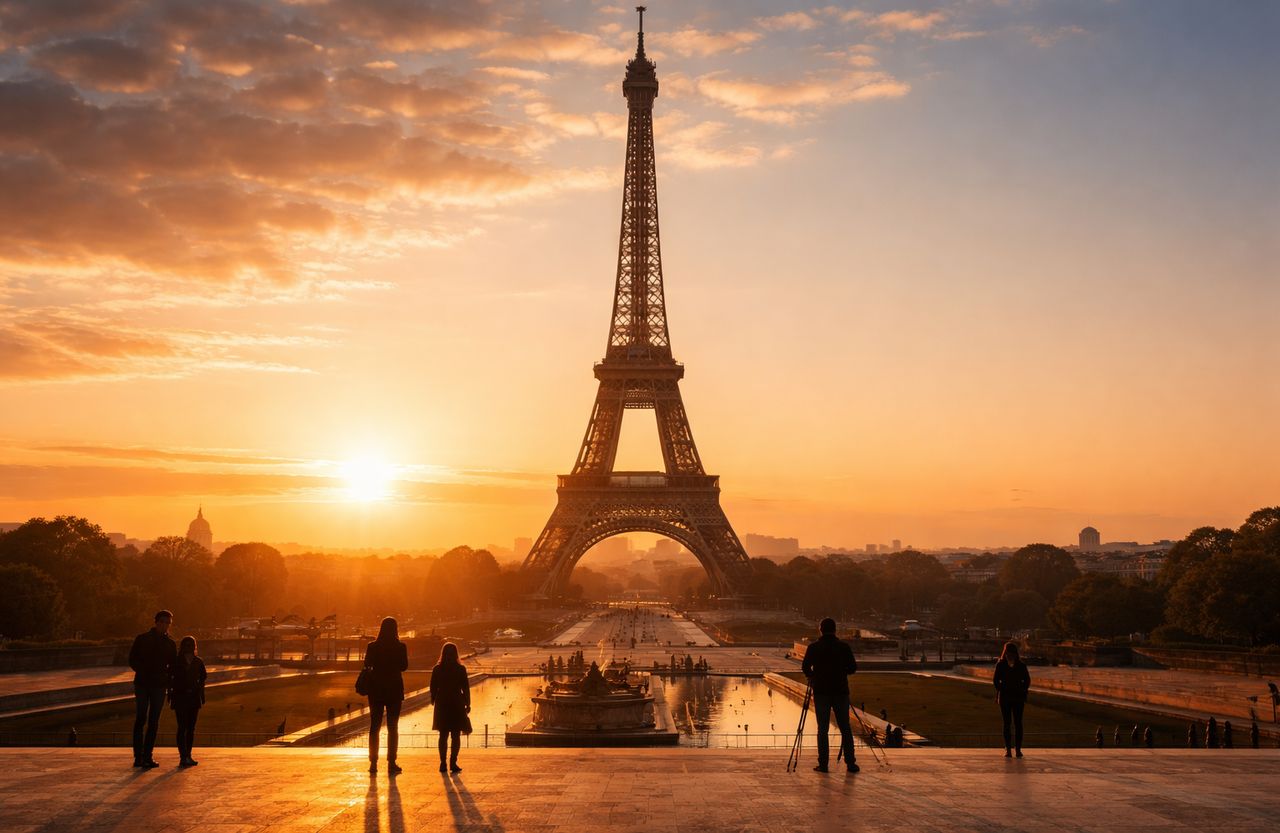
Shoot early or late for soft light. Midday light is flat and harsh. Bring a fast phone lens or a small zoom. Use railings for stability. If you want the tower in your shot, try these places:
- Trocadéro terraces across the Seine.
- The Champ de Mars lawns.
- Pont d’Iéna at river level.
- Rue de l’Université for a framed street view.
- Bir-Hakeim bridge for strong lines.
At night, the tower sparkles for several minutes each hour after dusk. The gold lighting is steady until late evening. Night photography from the ground is lovely, but respect local rules on publishing commercial night shots.
Dining, snacks, and restrooms
The first and second levels have snack bars. The first level hosts a brasserie that serves simple meals. A fine dining restaurant operates on the second level with set menus. Book well ahead for dinner tables. Restrooms sit on each public level. Lines move faster on the first level than at the summit.
Accessibility and families
Lifts reach the first and second levels for most visitors. The summit can be limited by weather or technical needs. Stairs are not suited to all travelers. Families with small kids should bring a soft carrier rather than a stroller. Changing tables are on lower levels. Staff are used to helping visitors who need extra time.
Safety and comfort
Watch your step on open stairs and wet floors. Hold phones and cameras near edges. Keep wallets zipped. Paris is safe by day, but pickpocketing can occur in crowds. Use cross-body bags. Drink water, as wind can dry you out even in cool months.
A short history that adds context
The tower faced protests during its build. Some artists called it an iron disaster. That view changed after the 1889 opening. Gustave Eiffel promoted science on the tower. He funded wind studies and weather readings. Radio tests during the early 1900s proved the tower’s value. During both World Wars, the tower stayed a symbol of Paris and France. Over time, paint and repairs kept it strong. Crews repaint the tower on a set cycle, which protects the iron frame.
Planning a smooth visit, step by step
- Pick a date and time that fit your schedule and light.
- Decide if you want the summit or only the second level.
- Book a timed ticket several days ahead when possible.
- Pack light, with layers and a phone strap.
- Arrive 20 to 30 minutes early for security checks.
- Start on the second level for detail views, then aim for the summit.
- End on the first level to rest, eat, and visit exhibits.
- Exit toward the Seine for photos at river level.
Common mistakes to avoid
Do not plan only midday in summer. Heat and glare reduce fun. Do not book a summit ticket if you fear heights or tight spaces. Do not bring large bags or banned items that trigger delays. Do not skip water or food, since visits can run long. Do not rush straight to the top, or you miss the second level views.
Quick comparison table
| Choice | Good for | Trade-offs |
| Stairs to 2nd level | Fitness, shorter lines, steady views | Many steps, no summit |
| Lift to 2nd level | Ease, families, mobility needs | Lines even with tickets |
| 2nd level only | Clear city details, strong photos | No summit bragging rights |
| Summit add-on | Full panorama, bucket list | Tighter space, weather closures |
Nearby sights for the same day
Walk to the Trocadéro for wide views and fountains. Take a cruise on the Seine from nearby docks. Cross to Rue Cler for food shops and cafés. Les Invalides is not far for military history. The Musée du Quai Branly sits close for world art.
FAQs
How long should I plan? Two to three hours is common. Add time for photos.
Is the summit worth it? It depends on you. Many love the second level most.
Can I bring a tripod? Small travel tripods may face limits. A phone clamp is safer.
Are sunsets busy? Yes. Arrive early, at least 45 minutes before dusk.
What if it rains? Wear a shell and expect wind at the top. The summit may close.
Why it matters
A good plan saves time and stress. The Eiffel Tower is busy and layered. Smart choices help you enjoy views, learn its story, and leave with strong photos. With this guide, you can spend less time in line and more time looking out over Paris.
Checklist for your visit:
- Timed ticket booked and saved offline.
- Light layers, hat, and good shoes.
- Small bag only, no banned items.
- Water, snacks, and a phone strap.
- Photo plan for one ground spot after your visit.
Sources:
- Société d’Exploitation de la Tour Eiffel, Tower history and visitor info, https://www.toureiffel.paris/en, accessed 2026-01-09
- Encyclopaedia Britannica, Eiffel Tower overview and facts, https://www.britannica.com/topic/Eiffel-Tower, accessed 2026-01-09
- Paris Convention and Visitors Bureau, Practical visit information, https://parisjetaime.com/eng, accessed 2026-01-09