Big Tech shares steady after Trump H-1B fee move, what’s next

TL;DR:
- On Sept 22, 2025, Big Tech shares were broadly steady in Frankfurt trade.
- The backdrop is Trump’s plan for a $100,000 H-1B fee.
- Firms issued travel guidance for staff after the proclamation.
- Investors see legal tests and delayed earnings impact.
- Watch policy clarifications and any court injunctions.
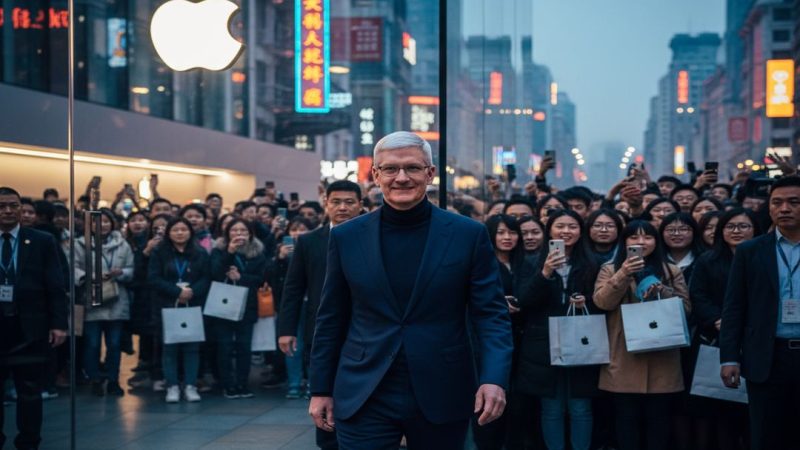
Shares of large U.S. tech companies were steady to slightly mixed on September 22, 2025, in Frankfurt trading. The move came days after President Donald Trump announced a plan to charge companies $100,000 per year for each H-1B worker. Reuters said the “Magnificent 7” traded between a 0.2 percent dip and a 1.1 percent gain in the session.
The policy shock is real, yet near-term pricing reflects a wait-and-see stance. Investors are weighing legal risks and how fast the fee could touch earnings. Reuters also noted that Microsoft, Amazon, Alphabet, and others issued urgent travel guidance to employees, advising them to remain in or quickly return to the United States. That step underlines operational risk while implementation details settle.
Why markets did not panic
Delayed impact. Companies book labor costs over time. If the rule starts with new petitions first, the hit phases in. Traders often discount measures that lack immediate cash flow effects. Legal overhang. Courts may test the administration’s authority to impose such a fee without Congress. Market desks factor in a non-zero chance of injunctions. Diversified staffing. Big Tech has already grown local hiring in the U.S. and expanded global hubs. That blunts some headline risk.
Where exposure is highest
Sectors that file many H-1B petitions each year, like cloud and enterprise software, face larger modeled costs if the rule bites. Financial firms with major tech centers would also feel it. Suppliers with less direct H-1B use may see less immediate pressure, though second-order effects can spread through contractors and vendors.
The policy backdrop and timeline
The White House proclamation issued on September 19 sets the $100,000 requirement as a condition for certain decisions on H-1B petitions, and directs Homeland Security and State to implement. Agencies have begun posting FAQs and clarifications that shape market expectations.
Investor checklist: dates and signals
- Agency guidance updates and court filings. These drive timing.
- Company 8-K or press statements on cost modeling or hiring plans.
- Travel and mobility memos from large employers. These reflect operational risk.
Why it matters
Big Tech is labor-intensive for high-skill roles. A large, recurring fee changes the math on hiring, contracting, and location. Markets are steady now, but clarity on scope and timing will decide if the policy dents 2026 margins or stays a headline risk with modest cost.
Sources:
- Reuters, Big Tech shares steady after Trump visa fees crackdown, https://www.reuters.com/business/autos-transportation/big-tech-shares-steady-after-trump-visa-fees-crackdown-2025-09-22/, 2025-09-22
- White House, Presidential Proclamation on certain nonimmigrant workers, https://www.whitehouse.gov/presidential-actions/2025/09/restriction-on-entry-of-certain-nonimmigrant-workers/, 2025-09-19
- USCIS, H-1B FAQ, https://www.uscis.gov/newsroom/alerts/h-1b-faq, 2025-09-21