India nipah virus outbreak

TL;DR:
- India confirmed two Nipah cases in West Bengal in January 2026.
- Authorities traced 196 contacts, all tested negative.
- WHO rates the current risk of spread as low.
- Airports across Asia added health checks after early reports.
- No vaccine yet, but basic steps cut risk for travelers and locals.
India reported two confirmed cases of Nipah virus in West Bengal in January 2026. Both patients were healthcare workers treated at a local hospital near Barasat, on the outskirts of Kolkata. India’s health ministry said 196 contacts were traced, monitored, and tested, with all results negative as of January 27, 2026.
On January 30, 2026, the World Health Organization said the risk of wider spread in India and beyond remained low. None of the identified contacts developed symptoms, and neither patient traveled while sick.
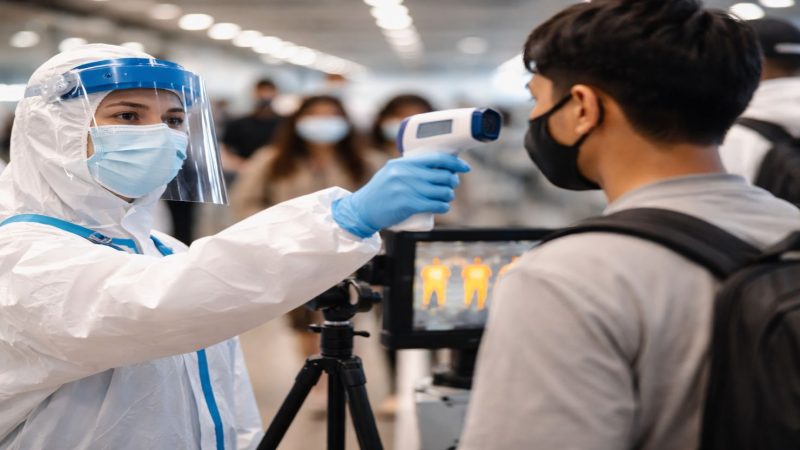
International attention rose after media reports hinted at a larger outbreak. By January 28 to 30, some Asian hubs added airport screening for travelers from India.
Where this sits in India’s Nipah history
India has seen Nipah before. The first recognized events were in Siliguri and other parts of West Bengal in 2001 and 2007. Since 2018, repeated but localized outbreaks have occurred in Kerala, where strong public health systems helped contain clusters. A government bulletin in January 2026 also notes a small Kerala outbreak in July 2025.
The current status
- Case count: Two confirmed cases linked to a healthcare setting in West Bengal. No additional cases among 196 contacts.
- Trend: Stable. No evidence of onward community spread as of February 3, 2026.
- International view: WHO and UN country teams echo a low risk of wider spread at this time.
What authorities are doing
The Press Information Bureau and India’s health ministry outlined contact tracing and testing steps, plus isolation of cases. The World Health Organization posted a Disease Outbreak News update on January 30 with technical details and a later correction note to align counts with national data.
Several countries in Asia increased airport screening, including thermal checks and health declarations, to reduce importation risk while more was learned.
What to know about Nipah
Nipah is a zoonotic virus carried by fruit bats. It can spread to people through contaminated food or direct contact with animals or infected people. Symptoms often start with fever and headache, and can progress to encephalitis. The fatality rate has ranged from 40 to 75 percent in past outbreaks. There is no licensed vaccine yet.
How this may affect you
For most travelers and businesses, the day-to-day risk from this event is low. Flights and trade remain open. If you live in or travel to affected areas, simple steps reduce risk.
Quick safety checklist
| Situation | What to do |
| Buying fresh fruit | Wash and peel. Avoid fruit with bat bite marks or sap drips. |
| Date palm sap | Avoid raw sap. Choose pasteurized products only. |
| Healthcare visits | Use masks in crowded facilities. Clean hands often. |
| Around livestock | Avoid sick pigs or animals. Report unusual illness. |
| Feeling unwell | Seek care early if fever or headache follows possible exposure. |
These steps come from consistent guidance shared by WHO and national health agencies during this event.
Background: why Kerala contains clusters fast
Kerala has contained several localized outbreaks since 2018 using rapid testing, ring-fencing of contacts, and strong community messaging. Those lessons inform national readiness even when cases appear in other states.
What happens next
- Surveillance continues. Authorities will keep monitoring contacts and nearby facilities in West Bengal. Any new suspected cases would be tested and isolated.
- Global watch, limited disruption. WHO assesses low risk and no sign of wider spread as of January 30. Border health checks may scale down if no further cases emerge.
- Research and diagnostics. Labs will compare sequences once available, and update risk if anything changes.
Why it matters
Clear information prevents panic and helps people take simple steps that work. Rapid tracing and transparent updates kept this event small. If anything changes, early detection will likely come from the same systems that found these cases.
Structured data suggestion for publishers
Use Article schema with:
- headline: “India Nipah virus outbreak: what happened and what’s next”
- datePublished: 2026-02-03
- dateModified: 2026-02-03
- author: ClubRive
- publisher: ClubRive
- image: 1200×630 feature image described below
Sources:
- Reuters, WHO says Nipah virus risk low in India with no sign of spread, https://www.reuters.com/business/healthcare-pharmaceuticals/who-says-nipah-virus-risk-low-india-with-no-sign-spread-2026-01-30/, 2026-01-30
- Press Information Bureau, Only Two Nipah Virus Disease Cases Reported in West Bengal; 196 Contacts Found Asymptomatic, https://www.pib.gov.in/PressReleseDetail.aspx?PRID=2219219&lang=1®=6, 2026-01-27
- WHO Disease Outbreak News, Nipah virus infection – India, https://www.who.int/emergencies/disease-outbreak-news/item/2026-DON593, 2026-01-30
- AP News, India says it has contained Nipah virus outbreak as some Asian countries ramp up health screenings, https://apnews.com/article/166df6c637780b99ede380bf4ddccfcc, 2026-01-29
- Al Jazeera, India says deadly Nipah virus contained after two cases confirmed, https://www.aljazeera.com/news/2026/1/28/india-says-deadly-nipah-virus-contained-after-two-cases-confirmed, 2026-01-28
- NDTV, How Kerala learned to contain Nipah virus outbreaks without a vaccine, https://www.ndtv.com/health/how-kerala-learned-to-contain-nipah-virus-outbreaks-without-a-vaccine-lessons-in-public-health-10913976, 2026-01-30
- UN India, Nipah Virus Update: West Bengal, India, https://india.un.org/en/309174-nipah-virus-update-west-bengal-india, 2026-01-29