How to take care of your nose: clean, moisturize, protect
How to take care of your nose: clean, moisturize, protect ClubRive …
How to take care of your nose: clean, moisturize, protect
TL;DR:
- Keep nasal lining moist with saline spray and room humidity.
- If you rinse, use distilled, sterile, or boiled-then-cooled water.
- Treat nosebleeds by leaning forward and pinching 10–15 minutes.
- Limit decongestant sprays to 3 days. Aim steroid sprays away from the septum.
- Protect the nose outdoors with sunscreen and a hat.
The basics of nose care
Your nose warms, filters, and humidifies air. When the lining gets dry or inflamed, you feel stuffy, sore, or you may bleed. Daily care keeps that lining healthy and lowers problems from colds, allergies, and dry air. A few small habits make a big difference.
Start with gentle steps, not force. Avoid hard blowing or picking. Keep fingernails short. Use a simple saline spray once or twice daily, especially in dry seasons or on flights. Cleveland Clinic advises gentle blowing and keeping the nose moist to help prevent irritation and nosebleeds.
Clean without harm
Skip cotton swabs inside the nostrils. They can scratch the lining. If crusts form, soften them with sterile saline and dab the entrance of the nostrils with a clean tissue or a tiny amount of plain petroleum jelly. Again, be gentle and avoid inserting swabs more than a quarter inch. Cleveland Clinic notes over-forceful blowing and picking are common triggers for bleeding.
Moisture matters
Dry indoor air irritates the nose. Aim for comfortable humidity and clean your humidifier often. The US EPA advises emptying and drying the tank daily and giving portable units a deeper clean every third day. Distilled water lowers mineral dust in the air.
Quick humidity tips
- Use distilled water in portable humidifiers.
- Empty, dry, and refill daily.
- Deep clean about every three days when in use.
Saline rinsing, done safely
Saline irrigation can wash out mucus and allergens. It helps during allergy flares and colds. If you rinse, water safety is the most important rule.
The FDA and CDC advise using only distilled or sterile water, or tap water that has been boiled and cooled. Do not use straight tap water. If boiling, bring water to a rolling boil for 1 minute. At elevations above 6,500 feet, boil for 3 minutes. Let it cool before use.
Rinse devices need cleaning too. Wash and air-dry your bottle or pot after each use, and replace when worn. Mayo Clinic notes neti pots can help dryness and congestion when used with saline and good hygiene.
Safe saline recipe
- 1 cup sterile, distilled, or boiled-then-cooled water.
- 0.5 teaspoon non-iodized salt.
- Optional pinch of baking soda to reduce sting.
Use within 24 hours, then discard. Follow device instructions for technique and cleaning. FDA guidance supports these safe water rules.
Using nasal sprays the right way
Many sprays help the nose, but technique and limits matter.
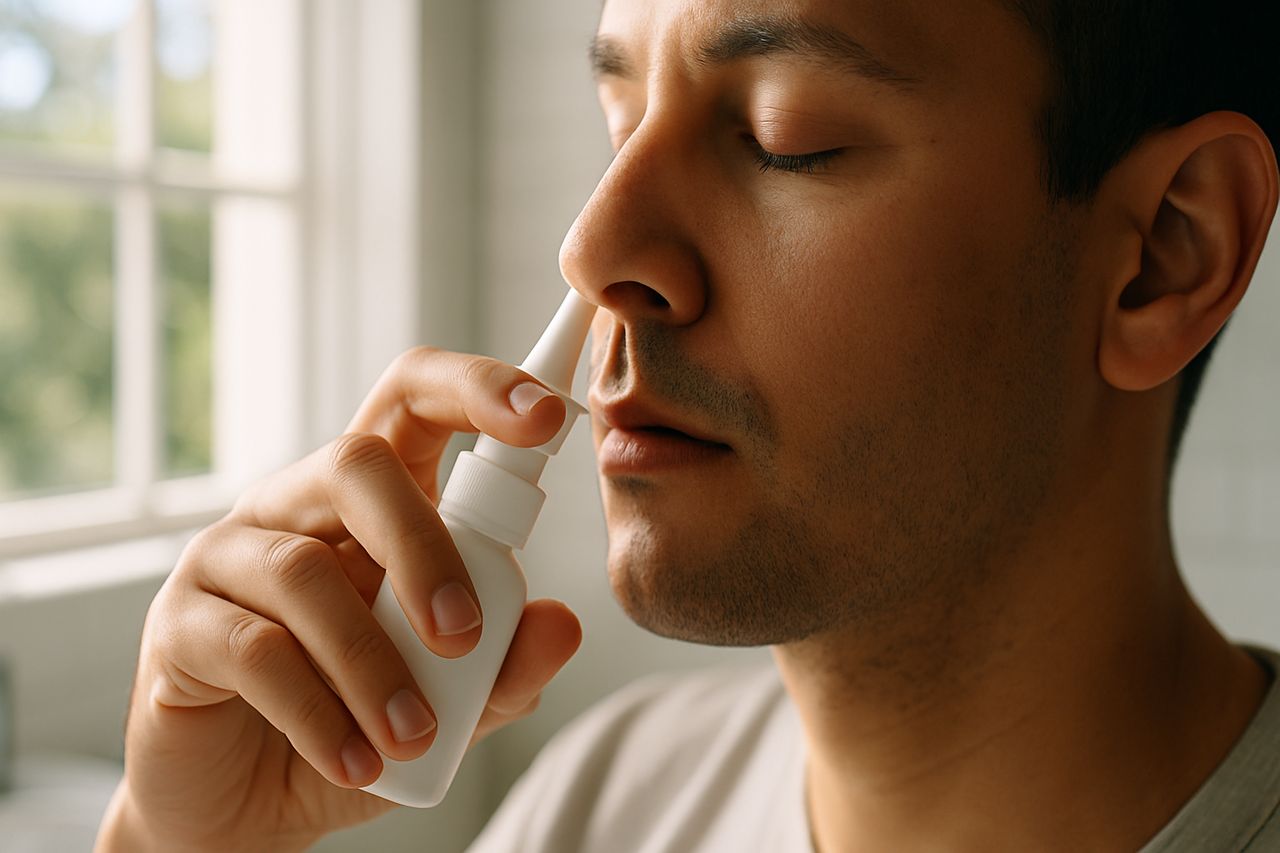
Steroid sprays reduce swelling from allergies. Keep your head upright, aim the nozzle slightly outward, away from the septum, and sniff gently so medicine stays in the nose. ENT-UK and Mount Sinai both stress aiming away from the septum and not sniffing hard.
Decongestant sprays open the nose fast, but only for a short spell. Using them longer than 3 days can cause rebound congestion. Mayo Clinic cautions to limit oxymetazoline and similar sprays to at most 3 days without medical advice.
Anticholinergic sprays like ipratropium can dry a runny nose for a few days. Follow dosing and time limits on the label. Mayo Clinic lists short-term use guidance.
If sprays sting, check your technique, lower the dose per instructions, or switch to isotonic saline between medicated doses.
Nosebleed first aid you can trust
Most nosebleeds are minor. Use this proven method.
- Sit up and lean forward slightly, so blood does not go down your throat.
- Gently blow once to clear clots.
- Pinch the soft part of your nose, just above the nostrils, and hold 10 to 15 minutes without checking.
- If bleeding continues, hold for another 10 to 15 minutes.
Avoid tilting back, stuffing tissues deep inside, or lying flat. After bleeding stops, do not pick or blow hard for 24 hours. NHS guidance gives the same steps and timeframe.
Seek urgent care if bleeding is heavy, caused by injury, or lasts longer than 30 minutes, or if you have anemia symptoms or are on blood thinners. Mayo Clinic and NHS offer clear thresholds for care.
Protect your nose outdoors
The bridge and tip of the nose burn easily. Use a broad spectrum sunscreen and a hat with a brim.
The American Academy of Dermatology advises SPF 30 or higher on all exposed skin, with reapplication every 2 hours or after swimming or sweating. The FDA echoes these points in consumer guidance. Do not forget the sides of the nose and under the brim reflection on water or snow.
Cold or windy weather can also chap the nostrils. A thin layer of plain petrolatum at the entrance of the nostrils can help trap moisture. Apply a tiny amount with clean hands.
Special cases: piercings and children
For a new nose piercing, keep hands clean and use sterile saline to clean during healing. Do not rotate jewelry unless your piercer instructs you to. The Association of Professional Piercers recommends sterile saline and gentle drying with disposable materials. The NHS also advises twice daily cleaning and choosing a licensed piercer. If you see spreading redness, severe pain, or pus, seek care.
For babies and young children, skip medicated sprays unless a clinician advises them. Saline drops and a gentle suction bulb can help with colds. Ask your pediatrician if problems persist.
When to see a clinician
- You have one-sided blockage that lasts over 3 weeks.
- You have frequent nosebleeds, especially with easy bruising.
- You have facial pain, fever, or thick discharge lasting more than 10 days.
- You need a decongestant spray beyond 3 days or have rebound congestion.
These signs point to issues that need tailored care. Mayo Clinic outlines limits for decongestant use and reasons to escalate.
A 1-minute daily checklist
| Habit | What to do | Why it helps |
| Saline spritz | 1–2 sprays each nostril, once or twice daily | Keeps lining moist |
| Gentle blow | One nostril at a time, low pressure | Prevents irritation and bleeding |
| Humidity | Use and clean humidifier on schedule | Reduces dryness and crusts |
| Smart sprays | Steroids aimed outward, decongestants max 3 days | Cuts swelling, avoids rebound |
| Sun care | SPF 30+, hat, reapply | Protects high-risk nose skin |
Why it matters
Healthy nasal lining filters germs and irritants, supports better sleep, and reduces headaches and bleeds. With simple steps like safe saline, clean humidity, and correct spray use, you can breathe easier and recover faster from common bugs, without side effects from overuse.
[Related: Best humidifier cleaning guide ? /home-humidifier-cleaning]
[Related: Allergy season survival tips ? /allergy-season-guide]
Sources:
- FDA, “Is Rinsing Your Sinuses With Neti Pots Safe?”, https://www.fda.gov/consumers/consumer-updates/rinsing-your-sinuses-neti-pots-safe, published April 28, 2025.
- CDC, “How to Safely Rinse Sinuses,” https://www.cdc.gov/naegleria/prevention/sinus-rinsing.html, updated July 16, 2025.
- EPA, “Use and Care of Home Humidifiers,” https://www.epa.gov/indoor-air-quality-iaq/use-and-care-home-humidifiers, accessed September 15, 2025.
- ENT-UK, “How to use nasal sprays,” https://www.entuk.org/patients/conditions/79/how_to_use_nasal_sprays/, accessed September 15, 2025.
- Mount Sinai, “Nasal corticosteroid sprays,” https://www.mountsinai.org/health-library/discharge-instructions/nasal-corticosteroid-sprays, accessed September 15, 2025.
- Mayo Clinic, “Oxymetazoline, nasal route,” https://www.mayoclinic.org/drugs-supplements/oxymetazoline-nasal-route/description/drg-20067830, updated July 2025.
- Mayo Clinic, “Acute sinusitis, Diagnosis and treatment,” https://www.mayoclinic.org/diseases-conditions/acute-sinusitis/diagnosis-treatment/drc-20351677, accessed September 15, 2025.
- Mayo Clinic, “First aid: Nosebleeds,” https://www.mayoclinic.org/first-aid/first-aid-nosebleeds/basics/art-20056683, accessed September 15, 2025.
- NHS, “Nosebleed,” https://www.nhs.uk/conditions/nosebleed/, accessed September 15, 2025.
- Cleveland Clinic, “How to Correctly Use Nasal Sprays,” https://health.clevelandclinic.org/how-to-use-nasal-spray, accessed September 15, 2025.
- Cleveland Clinic, “Nosebleeds (Epistaxis),” https://my.clevelandclinic.org/health/diseases/13464-nosebleed-epistaxis, accessed September 15, 2025.
- AAD, “How to apply sunscreen,” https://www.aad.org/public/everyday-care/sun-protection/shade-clothing-sunscreen/how-to-apply-sunscreen, updated August 15, 2025.
- FDA, “Sunscreen: How to Help Protect Your Skin,” https://www.fda.gov/drugs/understanding-over-counter-medicines/sunscreen-how-help-protect-your-skin-sun, updated August 16, 2024.
- Mayo Clinic, “Neti pot: Can it clear my nose?”, https://www.mayoclinic.org/diseases-conditions/common-cold/expert-answers/neti-pot/faq-20058305, accessed September 15, 2025.
- Association of Professional Piercers, “Suggested Aftercare for Body Piercings,” https://safepiercing.org/aftercare/, accessed September 15, 2025.
- NHS, “Infected piercings,” https://www.nhs.uk/conditions/infected-piercings/, accessed September 15, 2025.


