What bone broth is, and why people drink it
TL;DR:
- Bone broth gives protein and amino acids, but amounts vary.
- It may help joints and skin by adding collagen building blocks.
- Evidence for broth itself is limited, supplements are better studied.
- Watch sodium, quality, and heavy metals, keep intake moderate.
- Use broth smartly in soups, grains, sauces, or as a warm drink.
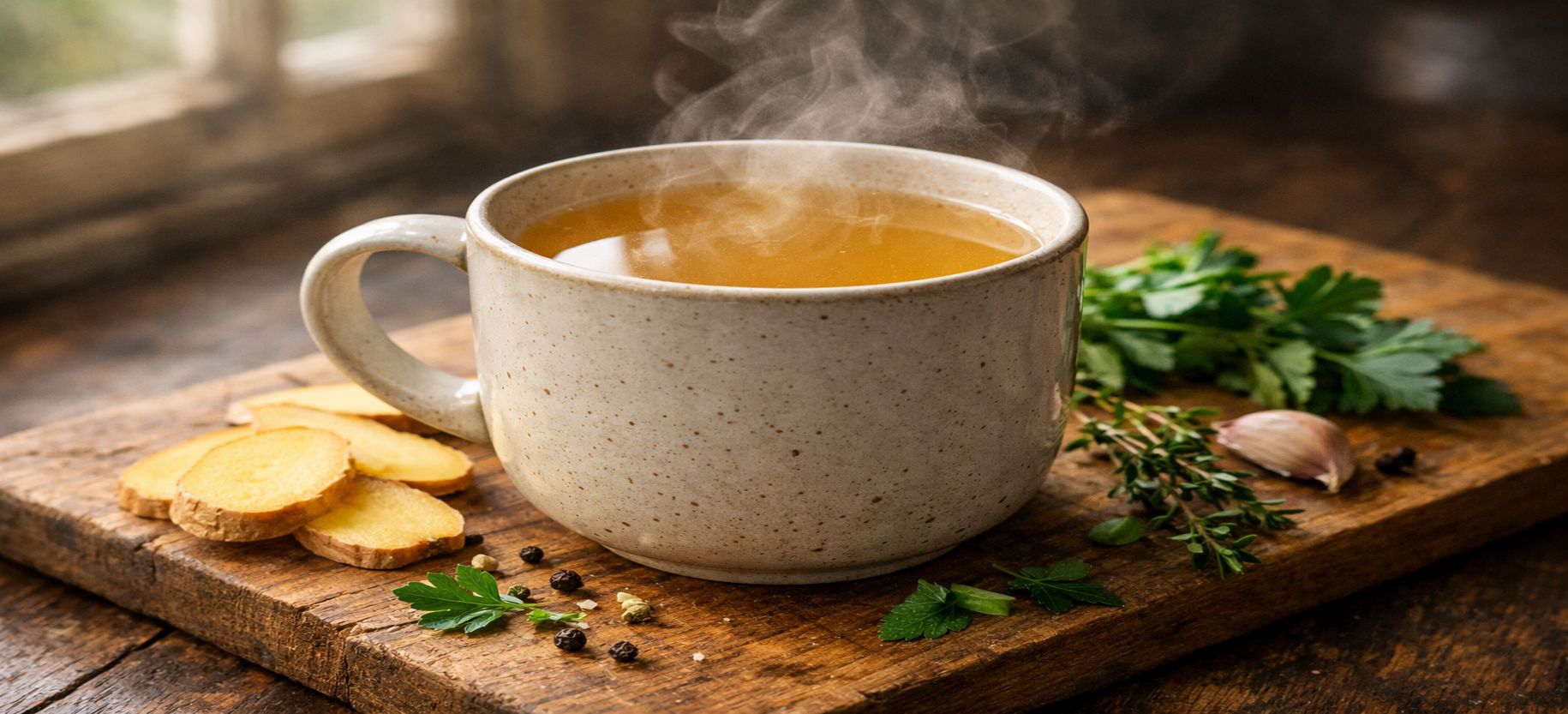
Bone broth is a slow simmer of animal bones and connective tissue in water with vinegar. Long cooking releases gelatin, amino acids, and small amounts of minerals into the liquid. Results vary by bones used, cook time, and brand. Harvard’s Nutrition Source notes this variability and explains how vinegar and time affect release of collagen and minerals.
Many people sip it warm or use it as a base for soups and sauces. You can buy it shelf stable, frozen, or make it at home. Cleveland Clinic describes common uses and the general nutrition profile.
The core benefits, in plain language
1) A convenient protein source
One cup of bone broth often has more protein than standard stock. Harvard Health reports about 8 to 10 grams per cup, though labels differ. Protein supports muscle, skin, and recovery.
2) Collagen building blocks for joints and skin
Broth supplies gelatin, which breaks into amino acids such as glycine and proline. Your body uses these to make collagen. Clinical trials on collagen peptides, not broth itself, show improved joint symptoms after months of steady intake. Reviews and trials in active adults and people with knee pain suggest 10 to 20 grams per day of collagen peptides can help. Broth has lower and variable amounts, but it contributes some of the same amino acids.
3) Gentle on the gut, easy to digest
People often tolerate broth when appetite is low. Early research links glycine and gelatin to gut barrier support, yet human trials with broth remain sparse. A recent academic review discusses how broth components may aid the intestinal barrier, but calls for more human data.
4) Small amounts of minerals
Broth contains calcium, magnesium, and phosphorus, but in modest amounts. Do not count on it as your main source of these minerals. Harvard Health and Cleveland Clinic both advise viewing it as a complement, not a cure.
What the science really says
It helps to separate “bone broth” from “collagen supplements.” Most human studies test collagen peptides in measured doses. These show benefits for joint comfort and function over 3 to 9 months. There are fewer controlled studies on broth itself, and nutrient levels differ by batch. Expect gentle support, not a quick fix.
If you like the taste and it fits your budget, broth can be part of a balanced plan. If you want targeted results for joints or skin, measured collagen peptides have stronger evidence. Harvard Health also notes that foods like chicken skin or fish skin supply collagen, though in small doses.
Safety, quality, and how much is reasonable
Heavy metals
A small 2013 pilot study found higher lead levels in chicken bone broth than in water used to cook it. Levels were still low in absolute terms, but this raised concern. Choose reputable brands with testing, vary your protein sources, and avoid extreme daily intakes.
Sodium
Store-bought broths can be high in sodium. Check labels and pick low-sodium versions, then season food at the end.
Allergens and additives
Some packaged broths add yeast extract or flavorings. If you are sensitive, read the ingredient list and choose simple labels.
Who should be careful
People with gout may wish to limit high-purine broths. Those with kidney disease should monitor sodium and protein. When pregnant or nursing, stick with reputable products and good kitchen hygiene. If you have any medical condition, ask your clinician.
A reasonable intake: 1 cup per day as part of meals is fine for most healthy adults. Rotate with other protein sources. Adjust based on your total diet.
How to use bone broth every day
You do not need to sip it plain to get the benefits. Use it where stock fits, then enjoy the extra protein.
- Cook grains like rice, quinoa, or farro in half broth, half water.
- Blend into pureed soups for body without cream.
- Make a quick pan sauce after sautéing meat or mushrooms.
- Sip a warm mug with ginger and lemon as a light snack.
- Freeze in ice cube trays to add to stir-fries and sauces.
Quick flavor boosters
Add a splash of vinegar when simmering. Toss in onion ends, celery tops, or a strip of kombu. Finish with fresh herbs, lemon zest, or a teaspoon of miso for depth.
Make or buy? A simple decision guide
Homemade broth is cheap and lets you control salt. It takes time. Store-bought saves time, but you must read labels. Harvard’s Nutrition Source reminds us that cooking method and bones used change nutrition, which is easier to manage at home.
Basic homemade method
- Save bones from cooked chicken or beef.
- Cover with water, add 1 to 2 tablespoons vinegar per liter.
- Add onion, carrot, celery, peppercorns, and a bay leaf.
- Simmer gently, 4 to 12 hours for poultry, 8 to 24 for beef.
- Strain, chill, then lift off hardened fat if you prefer.
- Store 4 days in the fridge or 3 months in the freezer.
Food safety tip: Keep the simmer low. Use clean tools. Cool quickly in shallow containers.
What bone broth will not do
It will not rebuild cartilage by itself. It will not replace a balanced diet. It will not fix skin aging overnight. Think of it as a helpful add-on that supports your protein goals and culinary routine, not a miracle.
Simple checklist
| Goal | What to do | How often | Notes |
| Add protein | Choose broth with 8–10 g protein per cup | Daily or as needed | Check the label, brands vary. |
| Support joints | Combine broth with protein-rich meals, or consider collagen peptides | Daily for 3–6 months | Trials support peptides more than broth. |
| Lower sodium | Buy low-sodium, season at the end | Ongoing | Taste before adding salt. |
| Manage safety | Vary sources, avoid excess intake | Ongoing | Pilot data found low lead in some broths. |
| Save time | Keep frozen cubes on hand | Weekly | Drop into sauces and grains. |
Sample 3-day mini plan
Day 1
Breakfast, oats cooked in half broth with mushrooms and egg.
Lunch, lentil soup made with broth and leafy greens.
Dinner, chicken stir-fry finished with broth and soy sauce.
Day 2
Breakfast, savory miso broth with tofu and scallions.
Lunch, quinoa cooked in broth, chickpeas, roasted peppers.
Dinner, beef and barley soup with carrots and parsley.
Day 3
Breakfast, tomato-broth shakshuka with extra beans.
Lunch, mushroom buckwheat pilaf using broth.
Dinner, seafood stew with broth, fennel, and lemon.
Why it matters
Protein needs rise with age and activity. Bone broth offers an easy, warm way to add protein and collagen builders to meals. The science on broth is still growing, but it fits a balanced kitchen routine. Choose quality, keep portions sensible, and use it where it tastes great.
Sources:
- Cleveland Clinic, Bone Broth: Benefits, How To Make and Nutrition, https://health.clevelandclinic.org/bone-broth-benefits, 2024-08-16
- Harvard T.H. Chan School of Public Health, The Nutrition Source: Collagen, https://nutritionsource.hsph.harvard.edu/collagen/, accessed 2026-01-20
- Kviatkovsky SA et al., Collagen peptides supplementation improves function and pain, PubMed, https://pubmed.ncbi.nlm.nih.gov/37551682/, 2023-08-05
- Clark KL et al., 24-Week study on collagen hydrolysate and joint pain, PubMed, https://pubmed.ncbi.nlm.nih.gov/18416885/, 2008-04-11
- Monro JA et al., The risk of lead contamination in bone broth diets, PubMed, https://pubmed.ncbi.nlm.nih.gov/23375414/, 2013-04-01
- Khatri M et al., The effects of collagen peptide supplementation on body composition and joint health, PMC, https://pmc.ncbi.nlm.nih.gov/articles/PMC8521576/, 2021-10-21