Diarrheal diseases: causes, prevention, and treatment guide
TL;DR:
- Diarrhea still kills over 1 million people each year worldwide.
- Most deaths are preventable with clean water, ORS, zinc, and vaccines.
- Start oral rehydration early, keep feeding, and add zinc for children.
- Antibiotics help only for dysentery or cholera, not routine cases.
- Seek urgent care for blood in stool, severe dehydration, or infants.
What are diarrheal diseases
Diarrhea means three or more loose or watery stools per day. It can be acute, persistent, or chronic. The biggest danger is dehydration from rapid loss of water and salts. In 2021, about 1.2 million people died from diarrheal diseases, and in 2024 the World Health Organization estimated roughly 444,000 deaths among children under five each year. Recent burden studies still place yearly deaths above 1 million across all ages.
Who is most at risk
Infants, young children, and undernourished people face the highest risk. People in areas without safe water and sanitation are more exposed. Outbreaks also follow floods, displacement, and conflict. UNICEF reports diarrhea caused about 9 percent of all under-five deaths in 2021.
Common causes and how it spreads
Most cases come from viruses such as rotavirus and norovirus, and bacteria like E. coli, Shigella, Vibrio cholerae, and Salmonella. Parasites, including Giardia and Cryptosporidium, also play a role. Germs spread through contaminated water, food, hands, and surfaces. Open defecation, poor sanitation, and unsafe food handling increase risk.
Symptoms to watch
Typical symptoms are watery stool, cramps, bloating, nausea, and sometimes fever. Danger signs include very frequent stools, blood in stool, sunken eyes, very dry mouth, little or no urine, fast breathing, extreme thirst, lethargy, or confusion. Infants can worsen fast.
What to do at home first
1) Start oral rehydration early
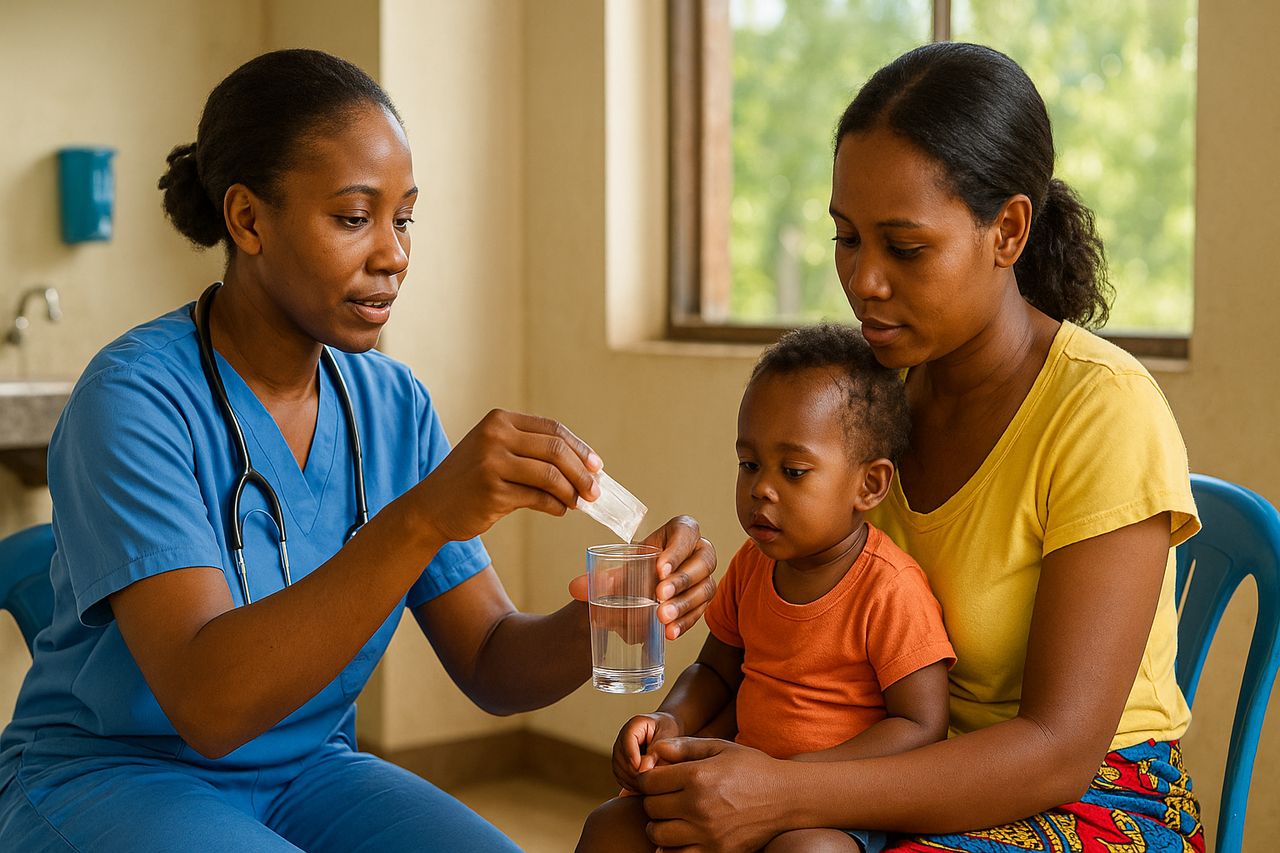
Use oral rehydration solution. It replaces water and the key salts lost in stool. Give frequent small sips after each loose stool. Continue until stools normalize. Ready-made ORS packets are best. If unavailable, a simple mix of clean water, sugar, and salt is an option, but prepackaged ORS is safer and balanced.
2) Keep eating
Adults and older children should eat small, frequent meals. Continue breastfeeding on demand. Formula-fed infants should continue their usual formula. Avoid very sugary drinks.
3) Add zinc for children
Give zinc for 10 to 14 days to shorten illness and reduce repeat episodes. Dose: 10 mg daily for infants under 6 months, 20 mg daily for children 6 months and older. Start as soon as diarrhea begins.
4) When to use medicines
You can use oral rehydration and, for adults with watery diarrhea, loperamide to reduce stool frequency if there is no blood or fever. Do not give loperamide to young children. Antibiotics are not routine. They are reserved for dysentery, suspected cholera with severe dehydration, or a doctor’s advice.
When to seek urgent care
Go to a clinic or emergency department if any of these occur:
- Blood in stool or black stools.
- Signs of severe dehydration, such as minimal urine, confusion, or collapse.
- Persistent vomiting that blocks fluid intake.
- High fever with severe abdominal pain.
- Infants under 6 months with any dehydration.
- Elderly people or those with chronic illness who worsen.
These signs need rapid assessment. Severe dehydration may require intravenous fluids.
Prevention that works
Safe water, sanitation, and hygiene
Handwashing with soap at key moments cuts diarrhea risk by about 30 to almost 50 percent in trials and reviews. Use safe water for drinking and food prep. Build and use toilets. Keep food surfaces clean.
Food safety basics
Cook food well, especially meats and seafood. Peel fruits or wash them with safe water. Keep raw and cooked foods separate. Keep foods either hot or refrigerated. Wash hands before cooking and eating.
Vaccination
Rotavirus vaccines, now in many national programs, reduce severe diarrhea and child deaths. Studies show sizable drops in hospitalizations and mortality after rollout, including low income countries. Oral cholera vaccines are useful for outbreaks and high-risk settings as part of a broader response. Follow your country’s schedule.
Special situations
Travelers
Travelers’ diarrhea is common in parts of Asia, Africa, the Middle East, and Latin America. Pack ORS, alcohol-based hand rub, and a simple antibiotic only if advised by a clinician. For febrile or bloody diarrhea, seek care. Some adult travelers use a short course of azithromycin for severe cases, often with loperamide, following medical advice.
Outbreaks and emergencies
In cholera outbreaks, quick access to ORS, clean water, and rehydration points saves lives. People with severe cholera need intravenous fluids and antibiotics at health facilities.
A simple home care and red-flag checklist
| Step | What to do | Notes |
| Fluids | Start ORS after each loose stool | Small, frequent sips |
| Feeding | Keep breastfeeding and regular diet | Avoid very sugary drinks |
| Zinc (kids) | 10 mg daily if under 6 months, 20 mg if 6 months+ | For 10–14 days |
| Medicines | Adults may use loperamide if no blood or fever | Not for young children |
| Hygiene | Wash hands with soap often | After toilet, before eating |
| Red flags | Blood in stool, severe thirst, no urine, lethargy, persistent vomiting, high fever, infants <6 months | Seek care urgently |
Common mistakes to avoid
- Waiting to start fluids. Start ORS at the first signs.
- Stopping feeding. Continued feeding helps recovery.
- Using antibiotics for simple watery diarrhea. Most do not need them.
- Giving anti-diarrheals to young children. This can harm.
- Ignoring handwashing and safe water. These are core defenses.
Why it matters
Diarrhea kills fast, yet simple steps prevent most deaths. Clean water and handwashing cut risk. ORS and zinc save lives when illness strikes. Vaccines protect the youngest children. With these tools in homes, clinics, and communities, countries can reduce child deaths further in the coming years.
Sources:
- World Health Organization, Diarrhoeal disease (fact sheet), https://www.who.int/news-room/fact-sheets/detail/diarrhoeal-disease, 2024-03-07
- UNICEF Data, Diarrhoea, https://data.unicef.org/topic/child-health/diarrhoeal-disease/, 2024-11-01
- The Lancet Infectious Diseases, Global age-sex burden of diarrhoeal diseases, https://www.thelancet.com/journals/laninf/article/PIIS1473-3099%2824%2900691-1/fulltext, 2025-06-15
- WHO ELENA, Zinc supplementation in the management of diarrhoea, https://www.who.int/tools/elena/interventions/zinc-diarrhoea, 2023-08-09
- The Lancet, Effectiveness of WASH interventions (systematic review), https://www.thelancet.com/journals/lancet/article/PIIS0140-6736%2822%2900937-0/fulltext, 2022-10-29
- CDC Yellow Book, Travelers’ Diarrhea, https://www.cdc.gov/yellow-book/hcp/preparing-international-travelers/travelers-diarrhea.html, 2025-04-23
- Journal of Infectious Diseases, Global impact of rotavirus vaccination on diarrhea, https://academic.oup.com/jid/article/222/10/1731/5755890, 2020-08-19
- WHO, Cholera fact sheet, https://www.who.int/news-room/fact-sheets/detail/cholera, 2024-12-05