Recover from blood loss fast: first aid, iron, safe return
TL;DR:
- Stop bleeding first, then call emergency help.
- In hospital, doctors use restrictive transfusion thresholds.
- Replace iron early, often for 3 months.
- Expect hemoglobin to rise within weeks, not days.
- Ease back into activity, watch symptoms, and recheck labs.
How to quickly recover from blood loss
Date: 30 September 2025
Blood loss recovery has two phases. First, stop the bleeding and prevent shock. Second, rebuild red blood cells and iron stores. This guide covers both.
If bleeding is happening now
Severe bleeding is a medical emergency. Apply firm, direct pressure with clean cloth or gauze. Keep pressure without peeking. Add layers if soaked. Use a tourniquet for arm or leg bleeding that will not stop with pressure. Do not remove a tourniquet once applied. These steps match current first aid guidance from the American Red Cross and the American Heart Association.
Call your local emergency number at once. People can die within minutes from uncontrolled bleeding, so act fast. Government programs such as Stop the Bleed teach these lifesaving skills worldwide.
Watch for shock
Lay the person down, keep them warm, and do not give food or drink if surgery may be needed. Rapid pulse, pale skin, and confusion are danger signs. Seek urgent care. Authoritative first aid sources list these signs and early steps.
What happens in the hospital
Clinicians will check vital signs, stop bleeding, and order labs. If blood loss is large or ongoing, they may transfuse red blood cells.
Most modern guidelines use a restrictive transfusion threshold. Many stable adults receive transfusion when hemoglobin is below about 7 g/dL, not 9 or 10. This reduces risks and uses blood wisely. These thresholds come from the AABB international guideline updated in 2023. Your team may choose different levels if you have heart disease, ongoing bleeding, pregnancy, or other risks.
The recovery phase at home
Once bleeding is controlled and you are stable, the goal is to rebuild red cells and iron.
1) Replace iron early
Iron is the key building block for hemoglobin. Without enough iron, recovery stalls. The NIH Office of Dietary Supplements explains iron’s role and sources. Aim for iron rich foods daily, and consider supplements your clinician prescribes. Pair plant iron with vitamin C to boost absorption. Tea and coffee near tablets reduce absorption.
Many people start with oral iron. Lower daily doses or alternate day dosing can be easier on the stomach and may improve absorption in some settings. Several trials and reviews support this approach. Your clinician will match dose and schedule to your case.
If anemia is moderate to severe, or pills fail, intravenous iron works faster and avoids gut side effects. Postpartum research shows IV iron can raise hemoglobin quicker and improve fatigue compared with pills in appropriate patients. Decisions depend on severity and stability.
How fast will hemoglobin rise? With effective iron therapy, hemoglobin often increases about 2 g/dL within 4 to 8 weeks. If numbers do not rise, call your clinician to check dose, adherence, or other causes.
2) Eat for recovery
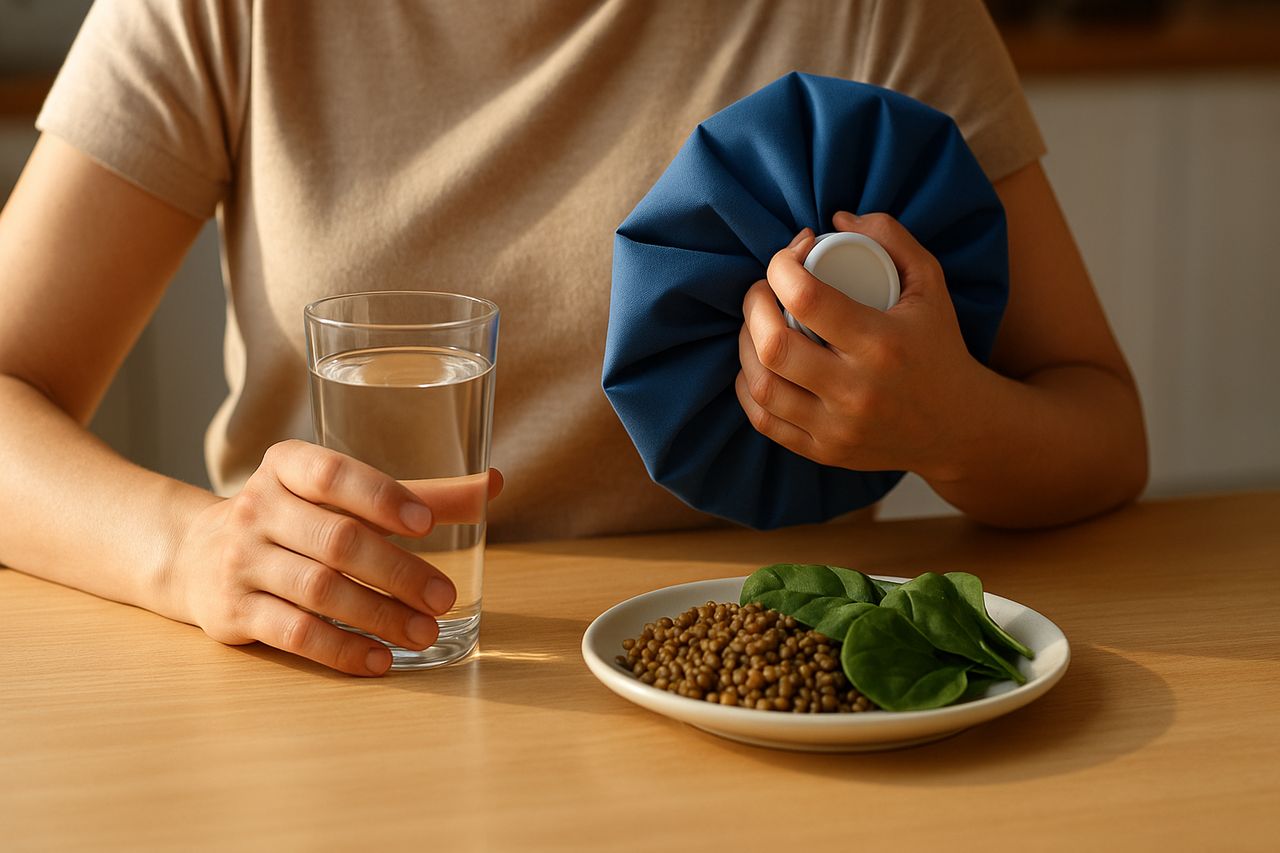
Choose iron rich foods that fit your culture and budget. Heme iron comes from meat and seafood and is well absorbed. Nonheme iron comes from beans, lentils, tofu, dark greens, fortified grains, nuts, and seeds. Add vitamin C sources like citrus, tomatoes, peppers, or guava to boost plant iron absorption. National nutrition resources list practical options and portions.
3) Fluids, rest, and sleep
Your body needs fluid to refill blood volume. Drink water and oral rehydration as advised. Sleep helps red cell production. Avoid alcohol until your clinician clears you.
4) Medicines to avoid or review
Ask before using NSAIDs like ibuprofen if you had a bleed from the stomach or bowel. These can worsen bleeding risk in some people. Your clinician may allow short courses when safe.
5) Activity and return to exercise
Start with light daily movement such as slow walks. Stop if you feel dizzy, short of breath, or have chest pain. Endurance or high intensity workouts can wait until your hemoglobin and iron recover. Sports medicine and hematology sources suggest easing in with low impact movement, then progress.
6) Follow up tests
Plan a repeat complete blood count and iron studies. Many clinicians recheck within 2 to 4 weeks after starting iron, then again at 8 to 12 weeks. Continue iron for at least 3 months or until ferritin normalizes, so iron stores refill. Postpartum guidance uses similar timelines. Your plan may differ.
Quick-start checklist
First 24 hours after significant blood loss
- Control bleeding. Pressure first, tourniquet for limbs if needed.
- Call emergency care and follow instructions.
- Lie down, keep warm, monitor breathing and pulse.
- At discharge, confirm your iron plan, dose, and follow up date.
- Arrange help at home for 48 hours if you feel weak.
Days 2 to 14
- Take iron as prescribed. Try with vitamin C rich foods.
- Drink fluids, eat iron rich meals, and sleep 7 to 9 hours.
- Walk daily. Avoid intense training until cleared.
- Watch for red flags below.
Weeks 3 to 8
- Expect hemoglobin to rise. Recheck labs as advised.
- Continue iron for 3 months, unless your clinician changes the plan.
- Gradually add moderate exercise if symptoms are gone.
Red flags, seek care now
- New or heavy bleeding from any site.
- Fainting, chest pain, fast breathing, or new confusion.
- Black stools, vomiting blood, or severe tummy pain.
- No hemoglobin rise after a month on iron.
Special situations
Postpartum recovery. After childbirth, anemia is common. Oral iron is often used for mild cases for about 3 months. IV iron is an option when anemia is more severe, pills are not tolerated, or quick recovery is needed. Your obstetric team will tailor the plan.
Chronic conditions. Kidney disease, inflammatory bowel disease, heavy periods, or ulcers can slow recovery. Treating the cause matters as much as iron. Your specialist may use IV iron or other options.
Dietary patterns. Plant based diets can meet iron needs with planning. Combine legumes, grains, nuts, seeds, and greens with vitamin C foods. Limit tea and coffee with iron tablets. Authoritative nutrition sheets explain these pairings.
A simple recovery timeline
| Time after bleed | What improves | What to do |
| 0 to 24 hours | Bleeding controlled, volume restored | Pressure or tourniquet, emergency care, fluids as directed |
| Days 2 to 7 | Symptoms start to ease | Take iron, eat well, short walks, rest |
| Weeks 2 to 4 | Lab numbers begin rising | Recheck labs if advised, continue iron |
| Weeks 4 to 8 | Hemoglobin up about 2 g/dL total | Increase activity as cleared |
| Up to 12 weeks | Iron stores refill | Keep iron until ferritin normal, then stop with clinician advice |
The exact pace varies by cause, severity, diet, and other health issues. The table is a guide, not a rule.
Why it matters
Fast action stops bleeding. Smart recovery restores strength sooner. Using modern transfusion rules and the right iron plan shortens downtime and reduces complications. You can help by following a clear schedule, eating iron rich foods, and keeping follow up appointments.
Important: This guide is general information, not medical advice. For personal guidance, speak with your clinician, especially if you are pregnant, have heart disease, or live at high altitude.
Sources:
- AABB, Red Blood Cell Transfusion: 2023 AABB International Guidelines, https://pubmed.ncbi.nlm.nih.gov/37824153/ and PDF summary https://clinlab.ucsf.edu/sites/g/files/tkssra15786/files/wysiwyg/RBC%20Transfusion%202023%20AABB%20International%20Guidelines.pdf, 12 Oct 2023
- American Red Cross, Bleeding (Life-Threatening External), https://www.redcross.org/take-a-class/resources/learn-first-aid/bleeding-life-threatening-external, accessed 30 Sep 2025
- American Heart Association and American Red Cross, 2024 First Aid Consensus, https://www.ahajournals.org/doi/10.1161/CIR.0000000000001281, 2024
- Stop the Bleed, Program overview, https://www.stopthebleed.org/, accessed 30 Sep 2025
- NIH Office of Dietary Supplements, Iron fact sheets, https://ods.od.nih.gov/factsheets/Iron-HealthProfessional/ and https://ods.od.nih.gov/factsheets/Iron-Consumer/, 4 Sep 2025 and 17 Aug 2023
- EclinicalMedicine (Lancet group), Alternate day versus consecutive day oral iron, https://www.thelancet.com/journals/eclinm/article/PIIS2589-5370(23)00463-7/fulltext, 2023
- World Health Organization, Anaemia overview, https://www.who.int/health-topics/anaemia, accessed 30 Sep 2025
- Jimenez K et al., Management of Iron Deficiency Anemia, https://pmc.ncbi.nlm.nih.gov/articles/PMC4836595/, 2015
- Current Concepts in Postpartum Anemia Management, https://journals.lww.com/co-anesthesiology/fulltext/2024/06000/current_concepts_in_postpartum_anemia_management.7.aspx and review on IV iron vs transfusion, https://systematicreviewsjournal.biomedcentral.com/articles/10.1186/s13643-023-02400-4, 2024
- USDA Dietary Guidelines, Food sources of iron, https://www.dietaryguidelines.gov/resources/2020-2025-dietary-guidelines-online-materials/food-sources-iron, accessed 30 Sep 2025